Yogurt is famous worldwide as a top source of beneficial lactic acid bacteria. However, there is a crucial catch: not all yogurt products on supermarket shelves contain significant numbers of live cultures. In many mass-produced yogurts, the beneficial bacteria do not survive the harsh manufacturing processes (like pasteurization *after* fermentation).
To combat this, quality manufacturers explicitly add hardy live cultures back into the product. While standard yogurt relies on Lactobacillus bulgaricus and Streptococcus thermophilus, some advanced probiotic yogurts include an extra powerhouse ingredient: the genus Bifidobacterium.
What is Bifidobacterium Yogurt?
“Bifidobacterium yogurt” refers to yogurt cultured with bacteria from the genus Bifidobacterium, in addition to standard yogurt cultures. The most commonly used strains in dairy products are Bifidobacterium animalis and Bifidobacterium bifidum.
These bacteria are potent probiotics known for their positive impact on human digestion. While most yogurts use a blend of bacteria, those specifically fortified with high counts of Bifidobacteria are slightly less common but highly sought after by the health-conscious.
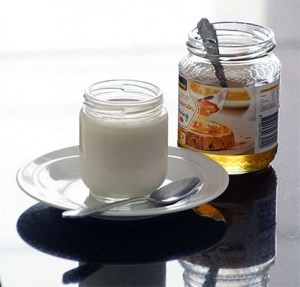
Homemade yogurt can be customized with specific probiotic strains.
How Bifidobacteria Benefit Your Gut
Several types of bacteria live naturally in the human intestines, providing a symbiotic relationship that benefits both them and us. Bifidobacteria are crucial residents of the large intestine.
When we consume yogurt rich in these live cultures, some survive the journey through the digestive tract and temporarily colonize the inner walls of the large intestine. Once there, they perform several vital functions:
- Digestive Aid: They assist the large intestine in breaking down remaining nutrients for further digestion.
- Crowding Out Bad Bacteria: By consuming available nutrients, they starve harmful bacteria, preventing infestations.
- Lowering Gut pH: Bifidobacteria produce lactic acid and acetic acid as fermentation byproducts. This lowers the pH level in the gut, creating an acidic environment unfavorable for harmful pathogens.
- Improved Transit: Their presence in the digestive tract is believed to decrease the time food takes to pass through the system (transit time).
Dairy and Non-Dairy Options
We prepare yogurt by adding live cultures to milk and allowing it to ferment. Fortunately, you can also transform non-dairy bases into bifidobacterium yogurt.
Common bases like soy, rice, and coconut milk work well. While additives are sometimes used to mimic the creamy texture of dairy, the added Bifidobacteria provide these alternative yogurts with the same probiotic benefits as traditional dairy yogurt.
Important Note on Regular Consumption
It is important to remember that most bacteria in probiotic yogurt, including Bifidobacteria, do not remain in our digestive tract permanently. They are “transient,” meaning they eventually pass out of the body with waste. To maintain their protective benefits, regular consumption is necessary.
How to Make Bifidobacterium Yogurt at Home
Making your own probiotic-rich yogurt at home is surprisingly simple. The key is using a starter culture that specifically includes Bifidobacterium strains.
What You Need
- Milk: 1 liter (approx. 1 quart) of whole milk works best for a creamy texture. You can also use soy or coconut milk with a thickener.
- Probiotic Starter Culture: This is crucial. You need a powdered yogurt starter that specifically lists Bifidobacterium on the packet. Alternatively, you can use 2-3 tablespoons of a previous batch of high-quality commercial Bifido yogurt with live cultures.
- Saucepan: For heating the milk.
- Thermometer: Essential for getting the temperature right.
- Incubator: A yogurt maker, Instant Pot with a yogurt setting, or a warm spot (like an oven with the light on) to keep the mixture warm for several hours.
Step-by-Step Guide
- Heat the Milk: Pour the milk into a saucepan and heat it slowly to roughly 85°C (185°F). Keep it at this temperature for a few minutes. This kills competing bacteria and changes the milk proteins so the yogurt sets properly.
- Cool Down: Remove the milk from heat and let it cool to roughly 43°C (110°F). Use your thermometer. This is critical: if the milk is too hot, it will kill your probiotic starter bacteria.
- Add the Starter: Once cooled, take a small cup of the warm milk and whisk in your powdered starter or store-bought yogurt until smooth. Then, pour this mixture back into the main pot of milk and stir gently to combine.
- Incubate: Pour the mixture into jars and place them in your yogurt maker or warm spot. Keep the temperature steady at around 43°C (110°F) for 8 to 12 hours. The longer it incubates, the tarter and thicker it becomes.
- Chill and Enjoy: Once set, move the jars to the fridge for at least 4 hours to firm up completely before eating. Save a few spoonfuls to start your next batch!