Troubleshooting Kombucha & Live SCOBY Cultures
Did your live kombucha SCOBY sink to the bottom of the jar, grow brown stringy yeast tails, turn your tea into sharp vinegar, or stay flat in the bottle? Use our visual SCOBY-versus-mold diagnostic chart and brewing protocols below to master every batch with confidence.
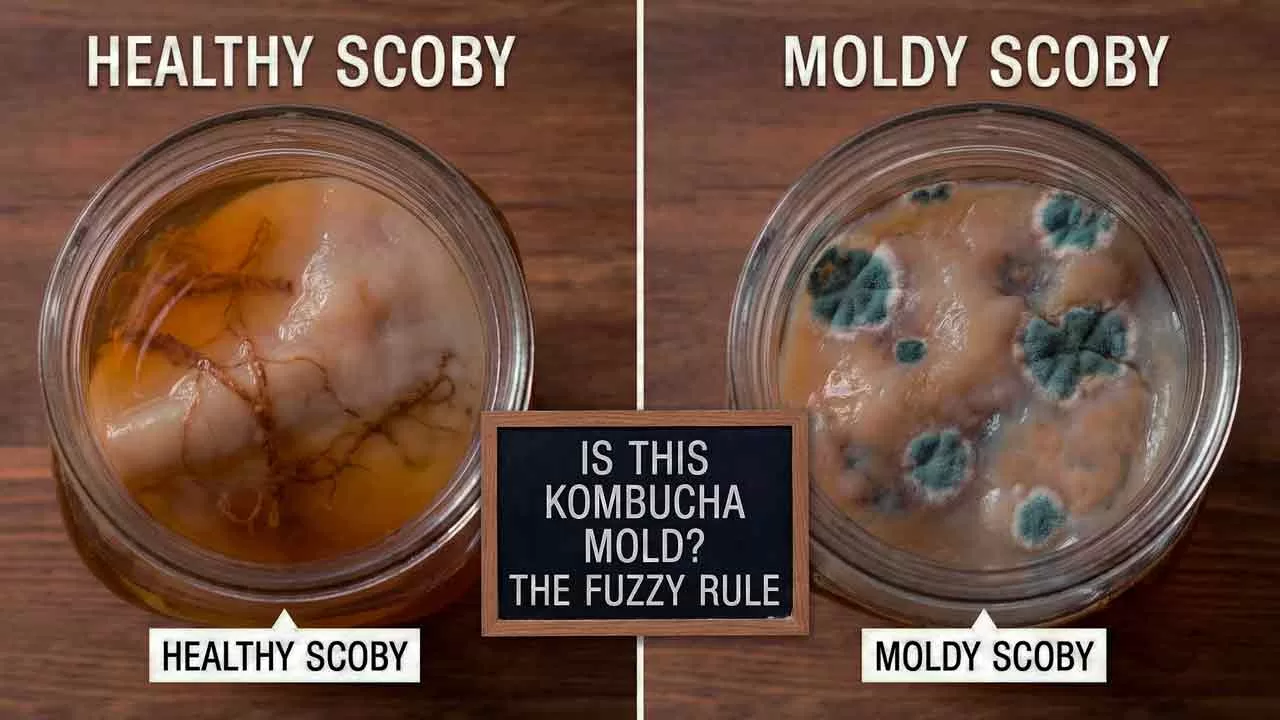
Rapid Diagnostic Matrix for Kombucha and SCOBY Problems
A live kombucha SCOBY (Symbiotic Culture of Bacteria and Yeast) is a living cellulose pellicle that constantly adapts its thickness, color, and buoyancy to your tea, sugar, and room warmth. Check your jar against our diagnostic reference matrix below:
| Observation in Jar | Safety Status | Biological Explanation | Recommended Action |
|---|---|---|---|
| SCOBY Sinks or Floats Sideways | ✔ 100% Normal | Temporary CO2 buoyancy shift; active microbes swim in the liquid | Leave undisturbed; a fresh baby SCOBY will form across the top surface |
| Translucent Jelly Patches on Top | ✔ Healthy Baby SCOBY | Komagataeibacter xylinus weaving new microbial cellulose | Do not stir or poke for 7 days so the new pellicle thickens evenly |
| Brown Stringy Threads Underneath | ✔ Healthy Yeast | Beneficial yeast aggregates bound to dark tea tannins | 100% safe; gently rinse excess sediment only if brew tastes overly yeasty |
| Tastes Like Sharp Apple Vinegar | ✔ Safe (Over-Fermented) | Brewed too long (>14 days) or warm room (>26°C) | Save as potent starter tea (15–20%) or culinary vinegar; harvest next batch at day 7–9 |
| Flat Kombucha After Bottling (F2) | ✔ Safe | Leaky bottle cap, cool room (<20°C), or settled yeasts left behind | Stir tea gently before bottling, add 1 tsp fruit/ginger juice, seal 2–4 days at 22°C |
| Dry Fuzzy Green, Black or Blue Dots | ✖ Unsafe (Mold) | Weak starter acidity (initial pH > 4.5) or chilly room (<18°C) | Discard SCOBY and liquid immediately; sterilize jar and restart with 15% acidic starter |
Visual Identification of Healthy SCOBY Growth vs. Mold
Between day two and day five of a new batch, nascent baby SCOBY cellulose often appears as translucent milky islands, trapped micro-bubbles, or uneven jelly-like patches that beginners mistake for mold. Surface moisture and texture distinguish them instantly:
How does normal new SCOBY growth look?
Healthy kombucha cellulose is always wet, shiny, smooth, or rubbery—starting as a sheer translucent film or milky-cream islands that gradually fuse into an opaque pancake spanning the exact diameter of your glass jar. Dark tan or brownish patches from tea tannins are also completely normal.
How can I spot dangerous kombucha mold?
Genuine mold is an aerobic fungus that always looks dry, fuzzy, powdery, or hairy—just like mold on bread or citrus—sitting high and dry on top of the surface in distinct circular green, blue, black, or chalky spots. Mold never looks wet or gelatinous.
Sinking SCOBY Pellicles and Brown Yeast Strands
Two of the most frequent questions from home kombucha brewers involve pellicle buoyancy and dark amber strands trailing beneath the disc:
🧭 Why did my kombucha SCOBY sink or float sideways?
A mother pellicle sinking to the bottom, hovering vertically, or tilting sideways has zero negative impact on fermentation. The rubbery cellulose mat is simply a protective house spun by the bacteria; the living microorganisms populate the acidic starter tea itself and immediately weave a new baby layer at the top surface.
🍵 What are the brown stringy strands under the SCOBY?
Amber or dark brown jellyfish-like tendrils hanging beneath the SCOBY or collecting as cloudy bottom sediment are healthy colonies of beneficial yeast (Saccharomyces and Zygosaccharomyces) clumped together with oxidized black tea polyphenols. They are essential for brisk bottle fizz.
Fixing Vinegar Acidity, Sweet Tea and Flat Carbonation
Achieving a crisp, balanced sweet-tart flavor and lively sparkle comes down to tasting at the right moment and trapping yeast activity cleanly in the bottle:
🍋 Why does my kombucha taste like strong sour vinegar?
Kombucha turns sharply vinegary when primary fermentation runs too long (past 12–14 days) or when summer room temperatures above 26°C accelerate acetic acid bacteria. While too tart to drink straight, over-fermented kombucha is liquid gold in a fermentation kitchen.
🥤 Why is my bottled kombucha flat after second fermentation?
Lack of fizz in F2 happens when yeasts settled at the bottom of the brewing jar so your top bottles received almost no yeast, when decorative square bottles or worn caps leaked pressure, or when F1 consumed 100% of the sugar before bottling.
Microbiological Science of Acetic Acid and Cellulose
Kombucha fermentation unfolds as a two-step biochemical partnership in sweetened Camellia sinensis (black, oolong, or green tea). First, osmophilic yeasts cleave sucrose into glucose and fructose via invertase, fermenting simple sugars into carbon dioxide bubbles and trace ethanol. Second, aerobic acetic acid bacteria—led by Komagataeibacter xylinus, Acetobacter, and Gluconacetobacter—oxidize ethanol into crisp acetic acid while converting glucose into gluconic acid and pure ribbons of microbial cellulose.
Because acetic acid bacteria strictly require oxygen to build the protective cellulose pellicle and synthesize organic acids, primary fermentation (F1) must always be covered with a tightly woven breathable cotton cloth secured with a snug rubber band—never a loose cheesecloth (which invites fruit flies) and never a sealed lid during F1.
Seasonal Temperature Control & Starter Acidification
Ninety percent of kombucha mold incidents across European homes occur between October and March when indoor temperatures drop below 19°C AND brewers use too little starter tea. Unlike milk kefir bacteria (which stay active at 19°C–20°C), kombucha acetic acid bacteria thrive between 22°C and 25°C. In a chilly 17°C room, the culture turns sluggish and fails to drop the liquid pH quickly enough.
Two golden rules make your kombucha virtually mold-proof all year round: first, always inoculate every new liter of cooled sweet tea with at least 15% to 20% strong, unpasteurized acidic starter tea (dropping the initial starting pH immediately below 4.5 before fermentation even begins), and never pour hot tea onto a live SCOBY (cool below 28°C first). Second, during cold winter months, keep your jar in a warm interior cupboard or wrap a low-wattage seedling/fermentation heating mat gently around the side of the vessel to maintain a steady 23°C.
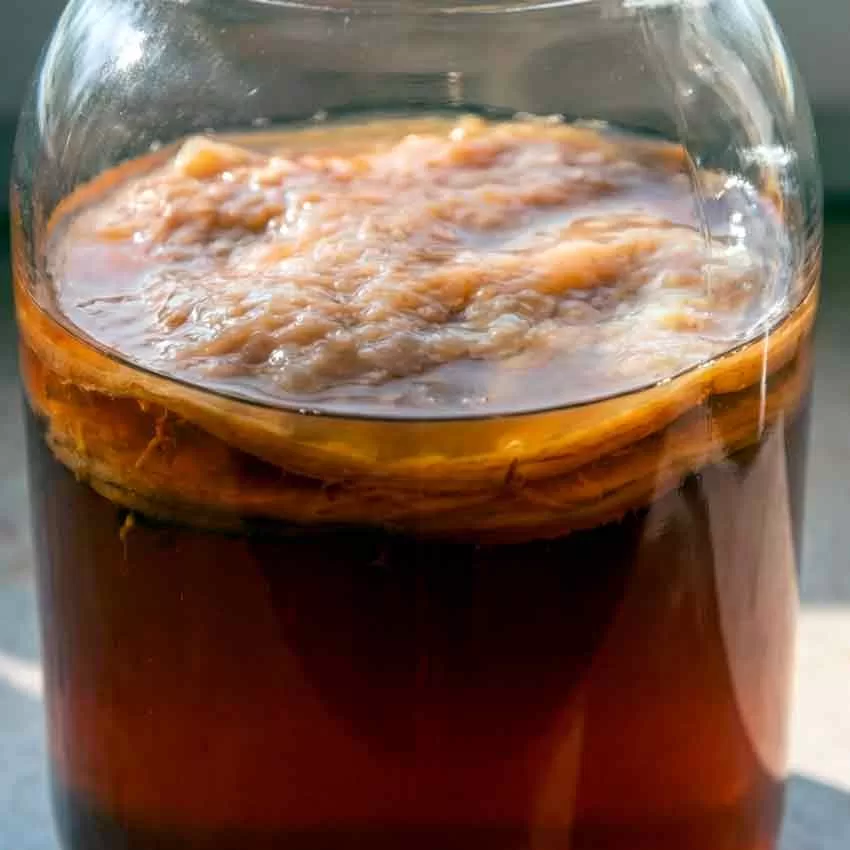 100% Live & Active
Start Fresh with a Certified Organic Live Kombucha SCOBY
Need to replace a compromised culture or start a brand-new fermentation jar? Our living cultures are fed and harvested fresh daily in small batches so they arrive vibrant, active, and ready to ferment from day one.