Troubleshooting Milk Kefir & Live Milk Kefir Grains
Is your homemade milk kefir separating into curds and yellow whey, staying watery and thin, smelling like bread yeast, or growing slowly? Use our visual diagnostic matrix and step-by-step microbiological recovery protocols below to restore thick, velvety milk kefir within 24 to 48 hours.
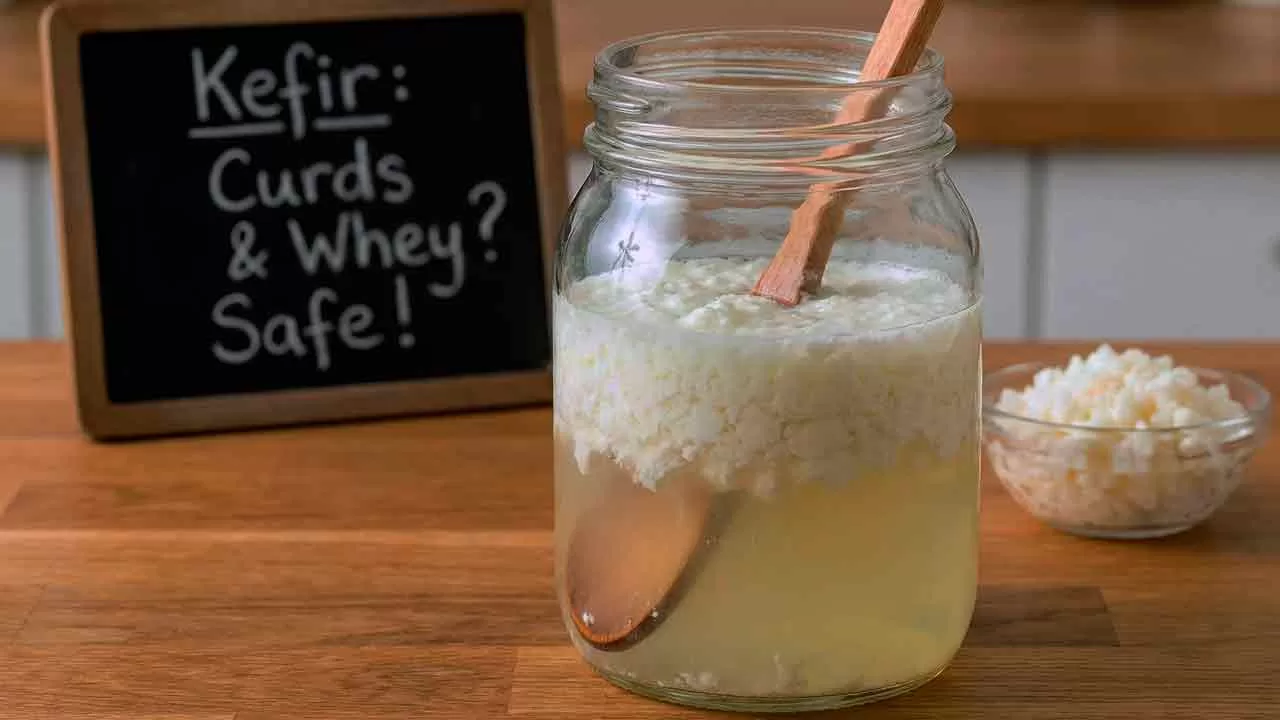
Rapid Diagnostic Matrix for Milk Kefir Problems
Nearly ninety-five percent of homemade dairy fermentation hiccups are caused by a temporary mismatch between ambient room temperature, milk volume, and fermentation time rather than damaged live milk kefir grains. Match what you see or smell in your jar against the chart below for an immediate 24-hour correction:
| Visual Symptom or Taste | Safety Status | Primary Root Cause | Immediate 24-Hour Correction |
|---|---|---|---|
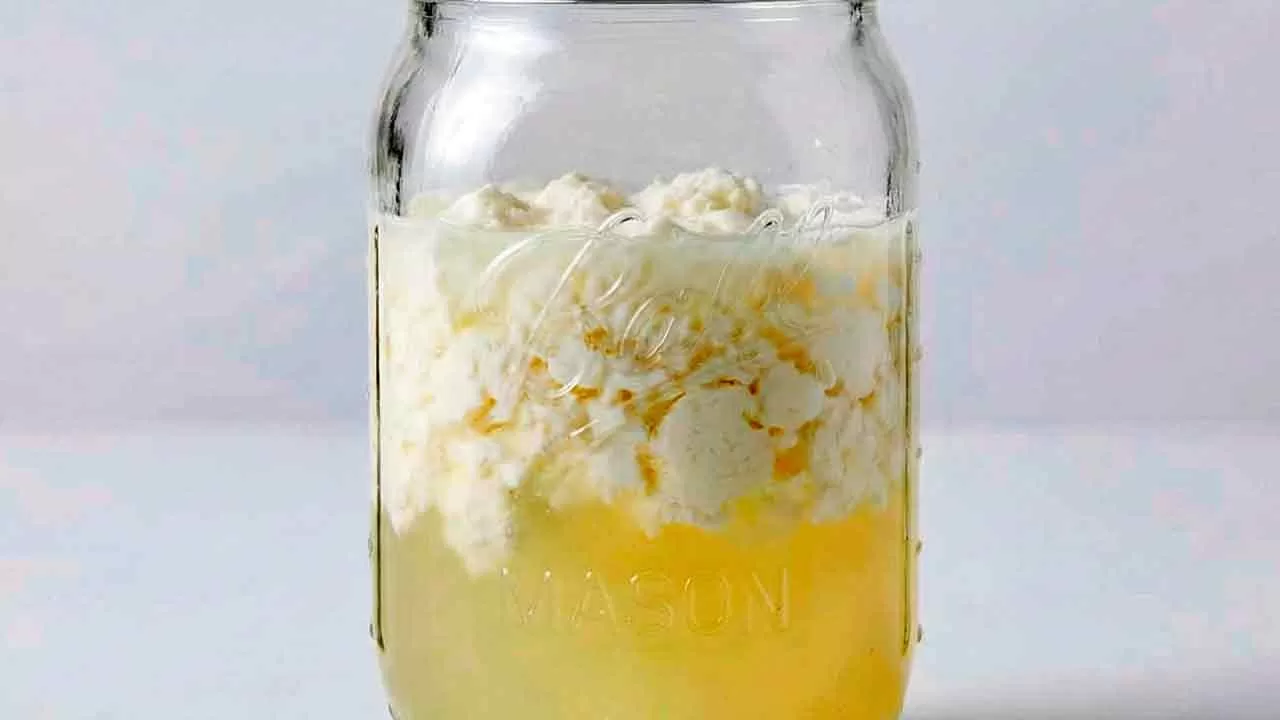
| White Curds & Clear Yellow Whey | ✔ 100% Safe | Over-fermentation (pH dropped below 4.4; lactose exhausted) | Stir well and drink; add 25% more fresh milk or shorten next cycle to 18h |
| Thin, Watery Milk After 24 Hours | ✔ Safe to Use | Room too cool (<18°C), skim milk, or transit dormancy | Move jar to a warm 22°C cupboard and feed pasteurized whole milk (3.5% fat) |
| Strong Bread or Beer Yeast Aroma | Safe (Off-Balance) | Warm kitchen (>25°C) caused yeast to outpace lactobacilli | Ferment at 19°C–20°C and rest live milk kefir grains in cold milk at 4°C for 24h |
| Clear Elastic Gel on Kefir Grains | ✔ Healthy Kefiran | Natural polysaccharide built by Lactobacillus kefiranofaciens | Never rinse away; kefiran creates thick, creamy probiotic milk kefir |
| Smooth Cream or Yellow Top Film | ✔ Safe Milk Fat | Natural butterfat rising in whole milk or harmless Kahm yeast | Skim off the top film with a clean spoon and strain the batch normally |
| Dry Fuzzy Green, Blue, Black or Pink | ✖ Unsafe (Mold) | Contaminated jar or dormant culture left warm without acidification | Discard entire jar contents immediately, sterilize glass, and replace culture |
Safety, Mold Identification and Surface Layers
Knowing the visual difference between normal butterfat separation, harmless wild surface yeast, and genuine mold gives you total confidence in your kitchen. Because healthy live milk kefir grains rapidly acidify fresh milk below pH 4.5 within the first ten to twelve hours, true mold contamination is extraordinarily rare during active daily fermentation.
What is the smooth yellowish or cream layer on top?
A smooth, glossy, non-fuzzy yellowish or cream-colored film at the top of your jar is simply natural milk fat rising in whole or non-homogenized dairy, or a thin pellicle of harmless aerobic Kahm yeast when a batch sits past 24 hours. As long as the kefir smells pleasantly tart and clean, your culture is completely safe.
How can I tell if my milk kefir has true mold?
Genuine mold never looks smooth or creamy. It appears as dry, fuzzy, velvety circular spots in green, blue, black, dark gray, or neon pink sitting on top of the surface, usually accompanied by an unmistakable musty cellar or spoiled odor. Mold spores send microscopic hyphae into liquid, so skimming is never safe.
Fixing Separation, Thin Texture and Yeasty Flavor
Once you confirm your batch is safe, dialing in a thick, velvety consistency and clean yogurt-like tang comes down to fine-tuning three variables: grain-to-milk ratio, ambient temperature, and cycle duration.
🥛 Why is my milk kefir separating into curds and yellow whey?
Separation happens when your live milk kefir grains consume nearly all available lactose and push the pH below 4.4. At dairy casein’s isoelectric point (pH 4.6), milk proteins contract into firm curds and squeeze out clear yellow probiotic whey. The separated batch is completely safe—stirring vigorously blends it back into a tart drink, or it makes an incredible fruit smoothie base.
🌡️ Why does my milk kefir stay thin instead of thickening?
Thin, pourable milk after 24 hours occurs when ambient temperatures drop below 18°C, when newly delivered live milk kefir grains are waking up from transit during their first two or three cycles, or when using skim milk or excessive milk volume for a small grain portion. Cold temperatures slow down kefiran-producing lactobacilli.
🍞 Why does my milk kefir smell or taste strongly yeasty?
A bread-dough or beer-like aroma develops during warm summer spells above 25°C or after repeated over-fermentation cycles. Heat stimulates acid-tolerant yeasts (such as Saccharomyces and Kluyveromyces) to multiply faster than lactic acid bacteria, producing extra carbon dioxide and yeast esters at the expense of creamy lactic tang.
Restoring Growth and Vitality to Live Milk Kefir Grains
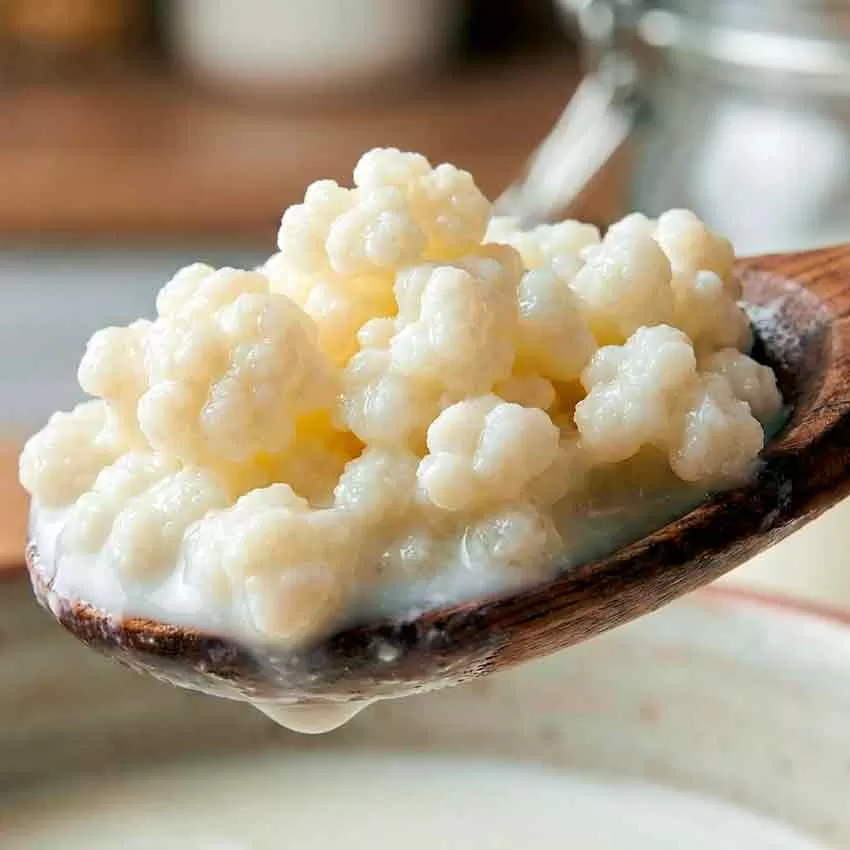
Healthy live milk kefir grains look like bouncy, off-white miniature cauliflower florets that increase in weight by five to ten percent every week. If your grains stop multiplying or develop translucent ribbons of gel, here is how to interpret and support them:
🌱 Why are my live milk kefir grains not multiplying?
Building new structural grain matrix requires steady daily lactose, calcium, and uninterrupted warmth. Frequent refrigerator pauses, ultra-low-fat skim milk, lactose-free dairy, or rinsing grains under chlorinated tap water strips away the protective surface biofilm required for biomass synthesis.
✨ Why are my grains coated in a clear elastic slime?
A glossy, stretchy, transparent gel coating on your live milk kefir grains is not spoilage—it is pure kefiran, a prized water-soluble probiotic polysaccharide synthesized by thriving Lactobacillus kefiranofaciens. Kefiran gives authentic homemade kefir its signature silky, velvety body.
Microbiological Science of Bacterial and Yeast Balance
Understanding why live milk kefir grains respond dynamically to temperature and milk choice comes down to the symbiosis between two microbial groups embedded inside the kefiran matrix: homofermentative and heterofermentative lactic acid bacteria (including Lactobacillus kefiri, Lactobacillus kefiranofaciens, Lactococcus lactis, and Leuconostoc mesenteroides) alongside lactose-fermenting and non-lactose-fermenting yeasts (such as Kluyveromyces marxianus and Saccharomyces cerevisiae). Lactic acid bacteria cleave milk lactose into lactic acid, gently cross-linking milk casein into a smooth gel, while yeasts contribute delicate effervescence and aromatic complexity.
Because lactic acid bacteria reach peak kefiran synthesis around 20°C to 23°C whereas kefir yeasts accelerate rapidly above 25°C, small adjustments to where your jar sits in the kitchen act like a precision dial. Cooler 19°C–21°C fermentations favor thick, mild, yogurt-like dairy kefir, whereas warmer 23°C–24°C cycles yield tangier, lightly fizzy kefir in shorter timeframes.
Seasonal Temperature & Milk Selection Guide
Across European homes, seasonal shifts are the number-one cause of sudden texture changes. Between November and March, nighttime kitchen temperatures often dip to 16°C–17°C, especially when a glass jar rests directly on a cold stone, tile, or granite countertop near an exterior wall. At 16°C, bacterial metabolism slows dramatically, leaving milk thin after 24 hours. Placing your jar on a wooden trivet inside an upper kitchen cupboard—or warming cold refrigerator milk slightly to room temperature (20°C) before adding your grains—eliminates winter sluggishness overnight.
During summer warm spells above 25°C, fermentation speed doubles. Reduce your grain-to-milk ratio slightly, place the jar in the coolest shaded room of your home, or transfer the jar to the refrigerator once the milk thickens at the 14-to-16-hour mark to enjoy slow, creamy cold maturation. For optimal long-term grain health, choose standard pasteurized whole cow, goat, or sheep milk (3.5%+ fat). While plant-based milks or lactose-free milk can be cultured occasionally, always alternate back into lactose-rich dairy milk every second or third cycle so your live milk kefir grains stay plump and self-multiplying for decades.
 100% Live & Active
Start Fresh with Certified Organic Live Milk Kefir Grains
Need to replace a compromised culture or start a brand-new fermentation jar? Our living cultures are fed and harvested fresh daily in small batches so they arrive vibrant, active, and ready to ferment from day one.