Kefir, Water Kefir & Kombucha Master FAQ
Browse 48 concise, science-backed answers organized across 8 brewing chapters—from choosing the right milk and stainless steel equipment to pausing grains on holiday, preventing bottle pressure, and troubleshooting curds, whey, or flat fizz.
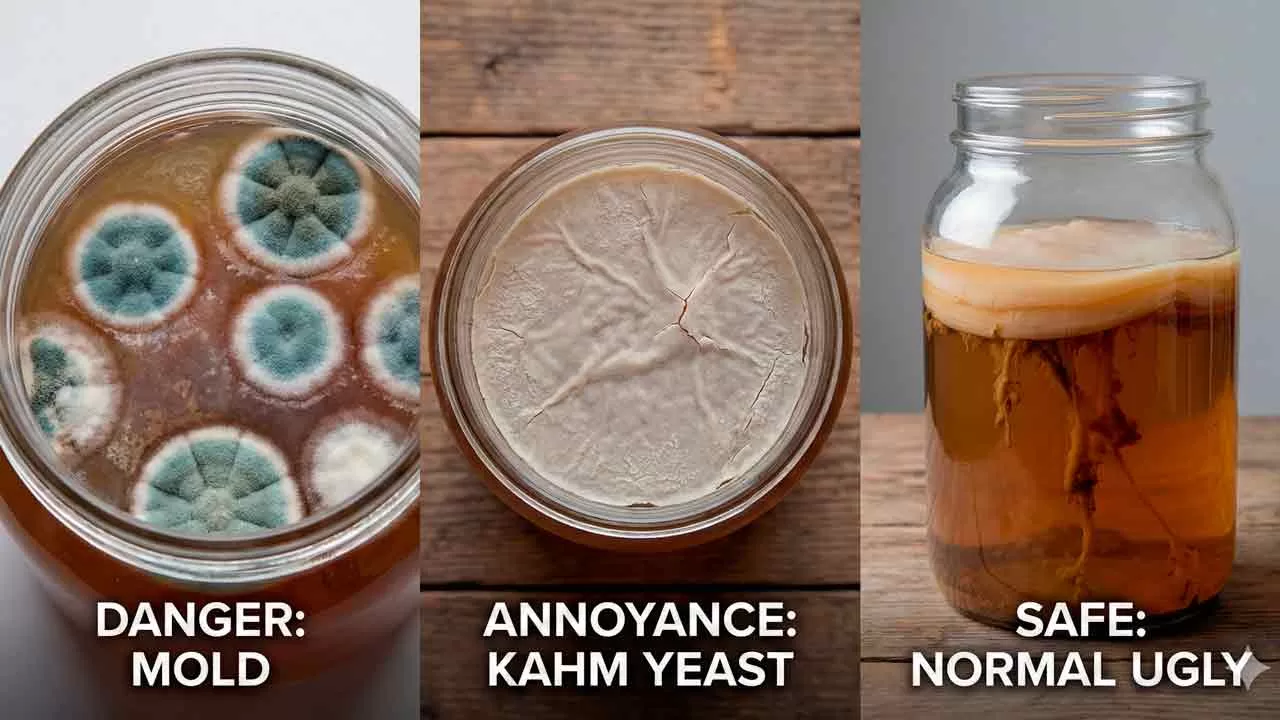
Need Instant Visual Diagnostics? Choose Your Culture
Milk Kefir Troubleshooter
Curds & whey separation, thin texture, yeasty smell, kefiran slime, and mold vs. cream film chart.
Water Kefir Troubleshooter
Flat second-ferment bottles, mineral ratios, mushy crystals, and ropy dextran recovery protocol.
Kombucha Troubleshooter
SCOBY mold vs. normal pellicle growth, vinegar sourness, Kahm yeast, and carbonation fixes.
- Chapter 1: Kefir Grains 101 — Origins, Strains & Starters
- Chapter 2: Milk Choices — Cow, Goat, Raw Dairy & Vegan Options
- Chapter 3: Daily Brewing Ratios, Equipment & Metal Safety
- Chapter 4: Taste, Separation, Slime & Mold Identification
- Chapter 5: Holiday Pauses, Fridge Storage, Freezing & Drying
- Chapter 6: Water Kefir (Tibicos), Sugars, Fizz & Bottle Safety
- Chapter 7: Heirloom Yogurt, Ryazhenka & Kombucha SCOBYs
- Chapter 8: Digestion, Lactose, Side Effects, Pets & Buying Starters
Kefir Grains 101 — Origins, Strains & Starters
What exactly are live milk kefir grains made of?
Live milk kefir grains are cauliflower-shaped gelatinous clusters composed of kefiran—a natural water-soluble polysaccharide—housing a symbiotic community of 35 to 50+ lactic acid bacteria, acetic acid bacteria, and beneficial yeasts. Explore the full microbiological composition of milk kefir grains.
Can you make kefir grains from scratch in your kitchen?
No. True living milk kefir grains cannot be synthesized from scratch using store-bought kefir, yogurt, or starter powders; every authentic grain alive today descends from heirloom Caucasus cultures passed from brewer to brewer. Read the fascinating history and origins of kefir grains.
What is the difference between live kefir grains and freeze-dried starter powder?
Live kefir grains contain 35–50+ self-multiplying microbial species that brew endlessly for decades, whereas commercial freeze-dried starter sachets contain only 3–7 isolated strains that weaken and die out after 2 to 4 batches. See our side-by-side live kefir grains vs. powdered starter comparison.
How is homemade milk kefir different from supermarket kefir bottles?
Commercial supermarket kefir is typically cultured with mild yogurt-like starter powders to prevent bottle swelling on store shelves, giving it far fewer probiotic CFUs and zero yeast diversity compared to traditional grain-fermented kefir. Compare both in our store-bought vs. homemade kefir guide and 7 reasons homemade kefir wins.
Are milk kefir grains and water kefir grains interchangeable?
They are two distinct cultures adapted to different sugars: opaque white milk kefir grains feed on dairy lactose, while translucent crystal-like water kefir grains (Tibicos) feed on sucrose and minerals. If you have extra dairy grains, read our guide on converting spare milk kefir grains before experimenting.
How long do healthy kefir grains live?
With regular feeding in fresh milk or mineralized sugar water at room temperature, authentic heirloom kefir grains live indefinitely and multiply by roughly 5% to 15% per week.
Milk Choices — Cow, Goat, Raw Dairy & Vegan Options
Which milk produces the thickest, creamiest homemade milk kefir?
Pasteurized whole cow milk (3.5%–3.8% fat) produces the richest, most velvety kefir and strongest grain multiplication. Semi-skimmed milk works well too, producing a slightly lighter drink. Compare every dairy option in our complete guide to milk types for dairy kefir.
Can I brew milk kefir with goat milk, sheep milk, or raw unpasteurized milk?
Yes! Goat milk ferments into a wonderfully digestible, slightly thinner kefir (due to smaller A2 casein micelles), sheep milk yields an ultra-thick Greek-style kefir, and fresh raw milk works beautifully once grains adapt for 2–3 cycles. Read our goat, sheep & raw milk kefir guide.
Does UHT (long-life carton) milk work for milk kefir?
Yes, plain whole or semi-skimmed UHT milk contains intact lactose and ferments reliably, though ultra-high heat slightly denatures whey proteins so texture can be marginally softer than fresh pasteurized milk.
Can I use lactose-free milk with milk kefir grains?
Avoid lactose-free milk for long-term daily maintenance because lactase-treated milk lacks the natural disaccharide lactose needed to build new kefiran grain matrix. Regular whole milk already becomes up to 99% lactose-reduced after a full 24-hour fermentation!
Is milk kefir vegan, or can I ferment coconut and plant-based milks?
Traditional dairy kefir is not vegan, water kefir is 100% vegan by nature. However, you can culture full-fat canned coconut milk or oat milk using milk kefir grains if you revitalize the grains in dairy milk every 3rd or 4th batch—follow our coconut milk kefir recipe and plant-based milk kefir guide.
Should milk be cold from the fridge or warmed before adding kefir grains?
Cold milk straight from the refrigerator (4°C–7°C) is completely safe and does not shock healthy kefir grains; it simply adds 1 to 2 hours to the total fermentation window until the jar reaches room temperature.
Daily Brewing Ratios, Equipment & Metal Safety
What is the ideal kefir-grain-to-milk ratio for a 24-hour fermentation?
Use approximately 1 tablespoon (15 g) of live milk kefir grains per 250–500 ml of milk (roughly a 1:20 to 1:30 ratio) at 20°C–22°C. Adjust milk volume rather than clock timing as your grains grow—use our exact grain-to-milk ratio chart and step-by-step milk kefir tutorial.
Can stainless steel spoons or mesh strainers harm live kefir grains?
Food-grade 304 or 316 (18/8 or 18/10) stainless steel strainers and spoons are 100% safe for brief straining and stirring. Only reactive metals—copper, brass, aluminum, cast iron, or silver—corrode on contact with acidic kefir and must be avoided. Read our full metallurgical guide to metal and kefir.
Should I ferment milk kefir with a breathable cloth cover or a tight lid?
Both work! A breathable cotton cloth or coffee filter encourages slightly milder, creamier bacterial growth, while a loosely closed glass lid traps gentle natural CO2 fizz. Never clamp an airtight jar without leaving 3–4 cm headspace. See more insider milk kefir brewing tips.
Should I rinse my milk kefir grains with tap water between batches?
No! Rinsing milk kefir grains under chlorinated or plain tap water washes away their protective acidic kefiran biofilm and weakens the culture. Simply strain out the thickened kefir and transfer the coated grains straight into fresh milk.
What is the ideal room temperature for fermenting kefir?
The sweet spot is 20°C to 23°C (68°F–73°F). Below 18°C fermentation slows down noticeably; above 26°C yeasts accelerate rapidly, causing faster curds-and-whey separation within 12–16 hours.
Can kids safely observe kefir fermentation as a kitchen science project?
Absolutely! Measuring pH drops, lactose digestion, and grain biomass growth makes an engaging hands-on microbiology project—see our STEM kefir lab experiment guide for kids.
Taste, Separation, Slime & Mold Identification
Why did my milk kefir separate into white curds and yellow liquid whey?
Separation simply means your batch fermented slightly past peak thickness (pH dropped below ~4.2), causing casein proteins to coagulate above pale-yellow whey. It is 100% safe—stir vigorously and drink, or strain the curds into creamy kefir labneh cheese and save the liquid for probiotic kefir whey uses.
How can I tell harmless surface yeast (Kahm) apart from real mold?
Harmless cream fat or Kahm yeast forms a flat, smooth, matte white or pale cream film with a normal tangy scent. True mold is distinctly fuzzy or velvety with green, blue, black, or bright pink spots and a musty odor—if true mold ever appears, discard the entire batch. Check our visual Milk Kefir Troubleshooting Matrix.
Why does my kefir taste or smell strongly like bread yeast or beer?
Warm kitchen temperatures (>25°C) or an overly high grain-to-milk ratio allow yeasts to outpace lactic acid bacteria. Ferment in a cooler 19°C–21°C spot and follow our guide to balancing yeasty vs. sour kefir flavor.
Why are my milk kefir grains coated in clear, stretchy slime?
That clear, elastic ribbon is kefiran, a prized prebiotic exopolysaccharide produced by healthy Lactobacillus kefiranofaciens. Never rinse it off—it indicates thriving grains and creates naturally thick kefir.
Why is my kefir staying thin and runny like plain milk after 24 hours?
Newly arrived or refrigerated grains sometimes need 2–3 daily milk changes at 21°C–23°C to wake up, or you may be using too much milk for your grain volume. Compare all causes in our complete fermentation troubleshooting guide.
Does strained milk kefir need to be refrigerated, and how long does it keep?
Yes! Once you strain out the grains, store your finished milk kefir in a sealed glass bottle in the refrigerator (4°C), where it stays fresh, tangy, and probiotic-rich for 10 to 14 days.
Holiday Pauses, Fridge Storage, Freezing & Drying
How do I pause milk kefir grains for a 1 to 3 week holiday?
Place your strained grains in a glass jar filled with 300–500 ml of fresh cold whole milk, close the lid loosely, and store in the refrigerator (4°C). Cold slows fermentation 8x so grains rest safely for up to 3 weeks—follow our complete vacation storage guide.
Can I freeze surplus kefir grains for long-term backup?
Yes, rinse-free milk kefir grains patted gently dry and coated in dry milk powder (or submerged in fresh milk inside a freezer-safe bag) survive freezing for 3 to 6 months as an emergency backup.
How do I air-dry (dehydrate) kefir grains at home?
Spread healthy surplus grains on unbleached parchment paper in a clean, draft-free spot below 30°C for 3 to 5 days until firm and golden. See step-by-step photos in our guide to dehydrating kefir grains and DIY kefir powder guide.
How long does it take to reactivate dehydrated milk or water kefir grains?
Dehydrated grains typically need 4 to 10 days of small daily milk or sugar-water changes at 22°C before full microbial balance returns. Follow our milk grain reactivation protocol or water grain rehydration steps.
What should I do when my kefir grains multiply into too many?
Share surplus grains with friends, freeze a backup portion, blend a spoonful directly into your morning probiotic smoothie, or feed a tiny pinch to pets!
Can kefir grains survive shipping in a postal pouch without refrigeration?
Yes—hydrated living grains packed with organic nutrient buffer stay comfortably active at ambient temperatures for 7 to 10 days; simply strain and place into fresh room-temperature milk on arrival (how live kefir grains travel safely).
Water Kefir (Tibicos), Sugars, Fizz & Bottle Safety
Which sugar is best for healthy, multiplying water kefir grains?
Organic blond cane sugar paired with a pinch of mineral-rich unrefined rapadura/molasses sugar, baking soda, or an organic unsulfured dried fig provides the ideal sucrose-to-mineral balance. Never use honey or artificial sweeteners in first fermentation! Check our complete water kefir sugar tier list.
Why is my water kefir flat instead of sparkling?
First fermentation occurs in an open breathable jar so CO2 naturally escapes. Champagne-like fizz is created during a sealed 24–48 hour second fermentation with fruit juice or ginger—try our sparkling ginger & lemon water kefir and read why water kefir stays flat.
Why did my second-ferment bottle overflow or burst—and how do I prevent it?
Square decorative bottles, excess fruit puree, or warm summer counters (>25°C) generate dangerous CO2 pressure. Always use heavy round pressure-rated swing-top bottles, leave 3–4 cm headspace, burp once at 24 hours in warm weather, and chill for 6 hours before opening.
Why are my water kefir grains mushy, shrinking, or stressed out?
Over-mineralization (too much molasses/baking soda), soft demineralized RO water, chlorinated tap water, or lemon slices touching the grains too long can stress crystals. Follow our stressed water kefir recovery guide.
How much sugar remains in finished water kefir?
During a 36 to 48 hour primary fermentation at 21°C–23°C, water kefir bacteria and yeasts metabolize 65% to 80% of the initial sucrose into organic acids, B-vitamins, and mild carbonation (complete 2-step water kefir guide).
What is the difference between water kefir and a homemade ginger bug?
Water kefir uses a stable heirloom crystal matrix (Tibicos) with predictable lactic acid bacteria, whereas a wild ginger bug relies on spontaneous skin yeasts from fresh ginger root.
Heirloom Yogurt, Ryazhenka & Kombucha SCOBYs
How does milk kefir compare to homemade yogurt?
Milk kefir ferments right on your countertop at 20°C–22°C with 35–50+ bacterial and yeast species (producing a pourable tangy drink), whereas traditional yogurt requires warm incubation (40°C–43°C) with thermophilic bacteria for a spoonable set. Compare both in milk kefir vs. yogurt.
What is Ryazhenka (traditional baked fermented milk)?
Ryazhenka is an Eastern European delicacy made by slowly simmering whole milk until caramelized and ivory-gold, then culturing it into a nutty, velvety probiotic drink without sour sharpness—follow our authentic Ryazhenka guide.
Can I make Bulgarian, Greek, or Bifidobacterium yogurt at home?
Yes! You can culture authentic Bulgarian Lactobacillus bulgaricus yogurt, strain thick protein-rich Greek yogurt, target gut-friendly Bifidobacterium yogurt, or learn homemade yogurt without a machine (as well as using a yogurt maker or heirloom yogurt starters).
Which tea works best for brewing homemade kombucha?
Organic loose-leaf or unbleached-bag black tea (Assam, Ceylon, English Breakfast), green tea, or a 50/50 blend provides the essential nitrogen, tannins, and caffeine a SCOBY needs. Avoid Earl Grey or oily herbal teas—see choosing the best tea for kombucha.
Does a kombucha SCOBY need to float on top, and can I grow one?
Whether your mother SCOBY floats, sinks, or tilts sideways makes zero difference—a fresh creamy pellicle always forms across the top air-liquid surface! Read how a kombucha SCOBY grows, evidence-based kombucha benefits, and our Kombucha Troubleshooting Hub.
Can I ferment kombucha and milk kefir in the same kitchen?
Yes—simply leave at least 1 meter of space between open breathable jars so airborne acetic acid bacteria from kombucha do not cross-colonize your dairy kefir jar.
Digestion, Lactose, Side Effects, Pets & Buying Starters
Can lactose-intolerant people drink homemade 24-hour milk kefir?
Most people with mild to moderate lactose intolerance tolerate full 24-hour homemade milk kefir very well because live kefir microbes consume up to 98%–99% of milk lactose and supply active microbial beta-galactosidase enzymes. Read more in our kefir & lactose digestion guide.
How much kefir should a beginner drink per day to avoid bloating?
Start slowly with 50 to 100 ml (3–4 tablespoons) per day for the first week so your gut microbiome adapts comfortably, then build up to 200–250 ml daily. Read about temporary adjustment symptoms in kefir side effects & histamine tips and the best time of day to drink kefir.
Does kefir contain trace natural alcohol?
Because living kefir and kombucha cultures include wild yeasts, homemade batches naturally contain trace fermentation alcohol—typically 0.2% to 0.8% ABV (similar to overripe bananas or natural apple juice), rising slightly if sealed airtight for warm secondary fermentation.
Is milk kefir safe to share with dogs and cats?
In small, plain, unflavored teaspoons (free of xylitol, sugar, or citrus), 24-hour lactose-reduced milk kefir is a popular whole-food probiotic topper for dogs and cats—check exact weight-based serving amounts in our kefir for pets guide.
Where can I order certified organic live kefir grains, and where does Kefirshop.eu ship?
Compare fresh hydrated grains against dried starters in our Live Kefir Grains Buying Guide. Our official partner webshop Kefirshop.eu cultivates certified organic milk kefir grains, water kefir grains, and kombucha SCOBYs with a 100% live arrival guarantee, currently shipping within Belgium & The Netherlands (shipping info).
Which payment methods are supported on Kefirshop.eu?
Kefirshop.eu supports direct Euro checkout via iDEAL, Bancontact, Apple Pay, PayPal, Klarna, and major credit cards.
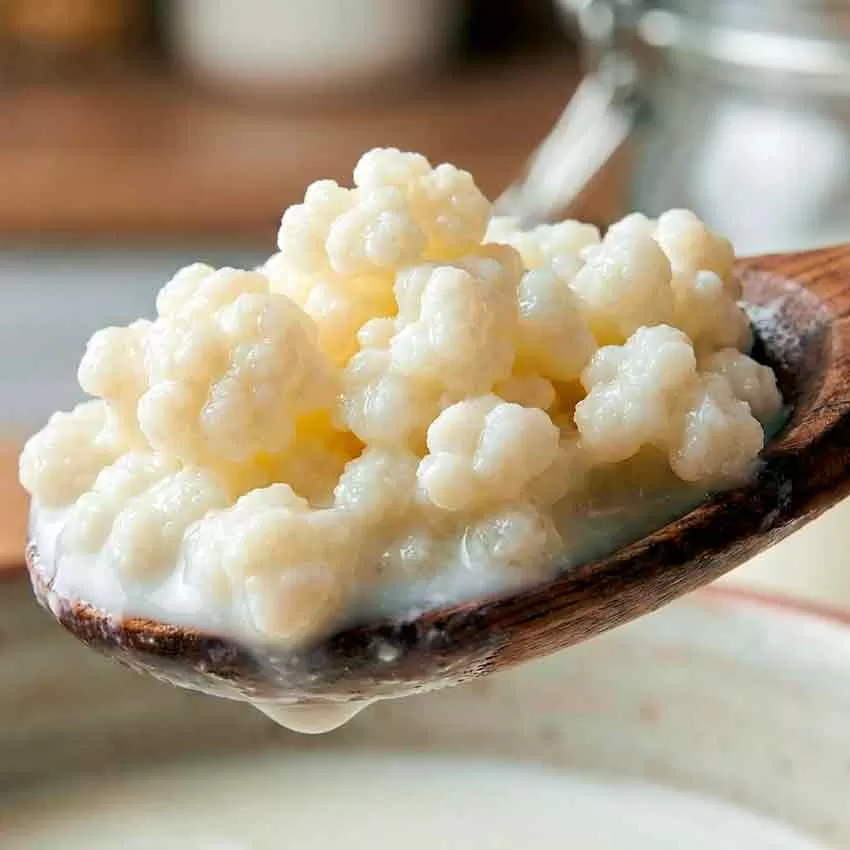 100% Live & Active
Start Brewing with Certified Organic Live Kefir Grains
Cultivated daily in small batches so your living milk kefir grains, water kefir crystals, or kombucha SCOBY arrive vibrant and ready to ferment from day one.