🍋 Troubleshooting Water Kefir
Is your water kefir not bubbling? Are the grains acting strangely? Don’t panic. Find detailed solutions to the most common challenges here.
⚠️ Safety & Mold
Is this mold? (Fuzzy spots)
True mold on water kefir is rare due to the acidity. Mold always appears “dry” and fuzzy or hairy. It floats on top of the liquid in colors like white, green, blue, or black.
Solution: Discard the entire batch, including the grains, immediately. Do not risk it. Sanitize all equipment thoroughly before starting over with fresh grains.
There is a white, dusty film on the surface (Kahm Yeast).
This is very often mistaken for mold, but it’s not. It’s likely ‘Kahm Yeast’. It looks like a thin, white, sometimes wrinkled or dusty film covering the liquid surface. It is not dangerous but can give the kefir a musty taste.
Solution: Skim the film off carefully. If it keeps returning or the kefir smells off: rinse the grains well under lukewarm water, clean the jar thoroughly (perhaps with vinegar), and start a new batch. Ensure the temperature isn’t too high and the jar can breathe (use a cloth cover during first fermentation).
Solution: Skim the film off carefully. If it keeps returning or the kefir smells off: rinse the grains well under lukewarm water, clean the jar thoroughly (perhaps with vinegar), and start a new batch. Ensure the temperature isn’t too high and the jar can breathe (use a cloth cover during first fermentation).
Grain Problems
My grains aren’t growing.
Water kefir grains sometimes take ‘pauses’. They only grow under ideal conditions.
Possible causes & solutions:
Possible causes & solutions:
- Too few minerals: Are you using very soft water or only white sugar? Add a few raisins, a piece of dried fig, a pinch of baking soda, or a splash of mineral water.
- Too many minerals: Are you using very hard water and lots of dark sugar (like molasses)? This can “suffocate” them. Switch temporarily to white sugar and lighter water.
- Temperature: Is it colder than 20°C (68°F)? Fermentation slows down significantly. Find a warmer spot.
The grains are getting smaller or disintegrating (mushy).
This is a sign of severe stress or a mineral deficiency. The grains are slowly dissolving.
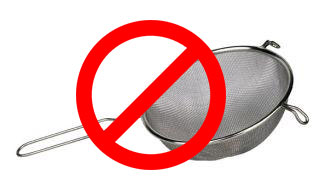
Solution: They urgently need minerals. Add a pinch of unrefined sea salt, a drop of molasses, or a few extra pieces of dried fruit (fig/apricot) to the next few batches. Also, ensure you aren’t handling them too roughly during sieving.
Solution: They urgently need minerals. Add a pinch of unrefined sea salt, a drop of molasses, or a few extra pieces of dried fruit (fig/apricot) to the next few batches. Also, ensure you aren’t handling them too roughly during sieving.
My grains are slimy / the drink is syrupy.
This is often caused by an imbalance: an overgrowth of certain yeasts or a bacteria (like Pediococcus) that produces a slimy biofilm. It’s generally not dangerous, but unpleasant.
Solution: Rinse the grains thoroughly under lukewarm tap water to remove most of the slime. Clean your jar and equipment thoroughly. Start a new batch with *fewer* minerals (only white sugar, no fruit for a cycle or two) to restore balance.
Solution: Rinse the grains thoroughly under lukewarm tap water to remove most of the slime. Clean your jar and equipment thoroughly. Start a new batch with *fewer* minerals (only white sugar, no fruit for a cycle or two) to restore balance.
Taste & Fizz Problems
There are little to no bubbles (flat).
During the first fermentation in the open jar, most carbon dioxide escapes. This is normal.
Solution: If you want fizzy kefir, you must do a second fermentation (F2) in a sealed, pressure-safe bottle. Add a little fruit juice or fresh fruit to the bottle to feed the yeasts, which will create carbonation. Ensure the temperature is above 20°C (68°F).
Solution: If you want fizzy kefir, you must do a second fermentation (F2) in a sealed, pressure-safe bottle. Add a little fruit juice or fresh fruit to the bottle to feed the yeasts, which will create carbonation. Ensure the temperature is above 20°C (68°F).
The kefir is too sweet.
The sugar hasn’t been consumed yet.
Causes: It’s too cold (below 20°C/68°F), you used too much sugar, or you haven’t let it ferment long enough.
Solution: Move the jar to a warmer spot or let it ferment for another 12-24 hours.
Causes: It’s too cold (below 20°C/68°F), you used too much sugar, or you haven’t let it ferment long enough.
Solution: Move the jar to a warmer spot or let it ferment for another 12-24 hours.
The kefir is too sour / tastes like vinegar.
It has fermented too long or it is very warm, causing it to ferment too quickly.
Solution: Harvest sooner next time (taste-test after 24 hours). If it’s very warm in your home, use slightly fewer grains. The sour kefir is safe to drink (diluted with water or juice) and makes excellent starter liquid for a new batch.
Solution: Harvest sooner next time (taste-test after 24 hours). If it’s very warm in your home, use slightly fewer grains. The sour kefir is safe to drink (diluted with water or juice) and makes excellent starter liquid for a new batch.
It smells like rotten eggs (sulfur).
This is a sign the yeasts are stressed, often due to an excess of certain minerals (frequently sulfur present in dried fruit or sometimes tap water).
Solution: Leave the lid off the jar for a few hours to let the smell dissipate. For the next batch, try different water and different (unsulfured!) dried fruit, or omit the fruit entirely for one cycle.
Solution: Leave the lid off the jar for a few hours to let the smell dissipate. For the next batch, try different water and different (unsulfured!) dried fruit, or omit the fruit entirely for one cycle.