Best Store-Bought Kefir in Europe — The Ultimate Brand Guide (2026)
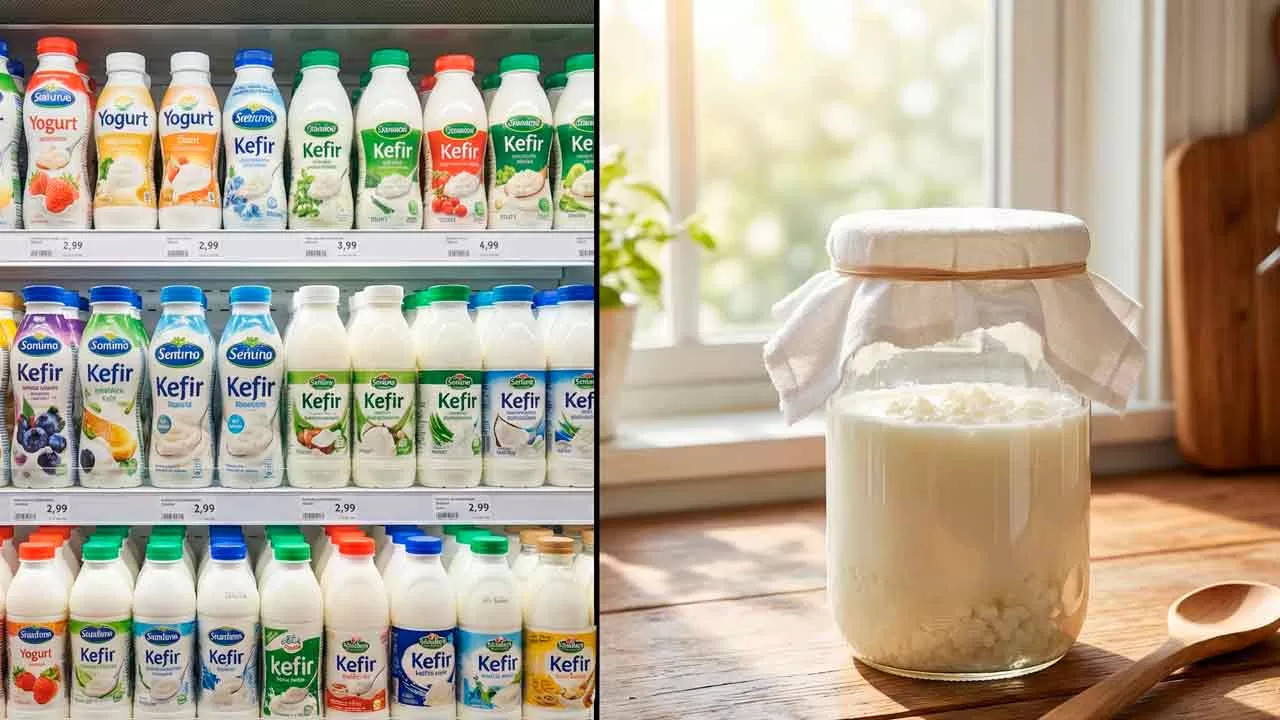
We all have those days. You want your daily dose of probiotics, but your homemade batch isn’t ready, or you are traveling abroad. Where can you find real kefir in a European supermarket?
- The “Easy” Way — Supermarket Brands
- The “Middle” Way — Freeze-Dried Kefir Starters
- The Real Cost — Why Live Kefir Grains Win
- Microbiological Science and the Symbiotic Culture Matrix
- Complete Reference Chart for Temperature, Ratios and Fermentation Control
- Seasonal Temperature & Ingredient Tips Across European Kitchens
- Quality Control, Kitchen Hygiene and Long-Term Culture Care
- Practical Checklist & Expert Takeaways for Consistent Results
While nothing beats the potency of homemade kefir (which contains up to 50+ strains of bacteria and yeast), there are decent alternatives if you know where to look. However, there is a big difference between “Kefir Mild”, “Freeze-Dried Starters”, and the real thing.
In this guide, we analyze the best Ready-to-Drink kefir Brands and Starter Powders across Europe, and see how they stack up against homemade kefir grains.
The “Easy” Way — Supermarket Brands
We scanned the shelves from Helsinki to Madrid. Here is what you can find in the refrigerated aisle.
| Region | Supermarkets | Brands | Verdict |
|---|---|---|---|
  Benelux | Albert Heijn, Delhaize, Jumbo, BioPlanet | Arla, Melkan, Pur Natur, Raw Milk Company | ⭐⭐⭐ Arla is mild. Look for “Rauwe Kefir” (Raw) at EkoPlaza for top quality (but pricey!). |
  DACH | Rewe, Edeka, DM, Aldi | Müller, Andechser Natur, Kalinka | ⭐⭐⭐ Beware of “Kefir Mild”—it lacks yeast. Andechser is the best organic choice. |
  Nordics | K-Market, ICA, Coop | Valio, Arla, Gefleortens | ⭐⭐⭐⭐⭐ Excellent variety. Also try Filmjölk (fermented milk). |
  East | Biedronka, Lidl, Kaufland | Robico, Krasnystaw, Vereya | ⭐⭐⭐⭐⭐ Kefir paradise. Robico (glass bottle) is very close to homemade. |
 France | Leclerc, Carrefour, Biocoop | Yorgos, Vrai, Candia | ⭐⭐ Often sold as “Lait Fermenté”. Vrai is a good organic option. |
The “Middle” Way — Freeze-Dried Kefir Starters
If you aren’t ready to care for live kefir grains daily, Powdered Starters are a popular entry point. These are lab-grown bacteria strains.
Note: Unlike real kefir grains which grow forever, powders eventually “die out.” You need to buy new sachets regularly.
| Brand | Origin | Price (Approx) | Notes |
|---|---|---|---|
| Lactina (Traditional Starter) | Bulgaria | €5.50 (10 sachets) | Best Value. Requires warmth (35-40°C) like yogurt. Great if you have a yogurt maker. |
| Natali Bio (Ferment Kéfir) | France | €7.00 (2 doses) | Reliable. We used to stock this in our shop. Very clean, mild taste. Ferments at room temp. |
| A. Vogel (Bio-Force) | DACH | €12.50 (3 sachets) | Very Common. Found in most Reformhuizen. Consistent quality. |
| Yalacta | France | €8.90 (1 vial) | The Classic. Sold in pharmacies. Must be “reactivated” first. |
Lactina vs. Real Kefir Grains
Not all kefir is created equal. Take Lactina for example. It’s a great Bulgarian product, but it requires heating milk to 35-40°C (Thermophilic). This makes it technically closer to a “drinkable yogurt.”
Real Kefir Grains are Mesophilic. They ferment at Room Temperature (20-24°C). If you heat them to 40°C, they will die! This low-temperature fermentation is what preserves the diverse yeast strains responsible for that unique “fizzy” kick.
The Real Cost — Why Live Kefir Grains Win
Powders and store-bought bottles are convenient, but they are expensive in the long run. Here is the math for a daily drinker (1 Liter/week) over one year.
| Type | Store-Bought | Powders | Live Kefir Grains |
|---|---|---|---|
| Initial Cost | €0 | €10 / month | €19.95 (One time) |
| Cost per Year | €182.00+ | €120.00+ | €66.75* |
| Re-usable? | No (Plastic Waste) | A few times | Forever |
*Calculated as: Price of Milk (€0.90/L) × 52 weeks + One-time purchase of Kefir Grains (€19.95).
Ready to Brew the Real Thing?
Stop renting your bacteria. Own them. Get 100% reusable, organic kefir grains delivered to your door.
Buy Fresh Organic Kefir Grains (€19.95)
Microbiological Science and the Symbiotic Culture Matrix
To truly master best store-bought kefir in europe: the ultimate brand guide (2026) in your home kitchen, it helps to understand what happens at a microscopic level inside your fermentation jar. Unlike commercial supermarket beverages that are inoculated with a handful of laboratory-isolated bacteria and then heat-treated for shelf stability, authentic homemade ferments rely on a living, self-regulating ecosystem. In live milk kefir grains, this ecosystem is bound together by kefiran—a natural, water-soluble polysaccharide matrix produced primarily by Lactobacillus kefiranofaciens. In fresh water kefir grains, a translucent dextran structure built by Lactobacillus hilgardii and Leuconostoc mesenteroides houses the symbiotic bacteria and yeasts, while a kombucha SCOBY weaves tough layers of pure microbial cellulose through the action of Komagataeibacter xylinus.
During every fermentation cycle, lactic acid bacteria (LAB), acetic acid bacteria (AAB), and beneficial non-pathogenic yeasts such as Saccharomyces cerevisiae, Kluyveromyces marxianus, and Kazachstania unispora communicate through metabolic cross-feeding. As yeasts break down complex disaccharides (lactose in dairy milk or sucrose in mineralized sugar water) into simpler monosaccharides, organic acids, B-vitamins, and trace carbon dioxide, the surrounding bacteria rapidly convert those sugars into lactic and acetic acid. This natural acidification drops the pH of your brew to a protective range between 4.0 and 4.5 within hours, naturally preventing unwanted spoilage organisms from taking hold while unlocking bioavailable amino acids, short-chain fatty acids, and digestive enzymes.
Complete Reference Chart for Temperature, Ratios and Fermentation Control
Whether you are brewing your very first jar or fine-tuning your daily routine for maximum creaminess, carbonation, and probiotic density, keeping your temperature, culture ratio, and fermentation window in balance is the secret to repeatable success. Use the reference table below to adjust your batch throughout the year:
| Fermentation Parameter | Optimal Daily Standard | Cool Winter Adjustment | Warm Summer Adjustment |
|---|---|---|---|
| Room Temperature | 20°C – 23°C Ideal balance | 16°C – 19°C Place in warm cupboard | 25°C – 28°C Cool kitchen spot |
| Kefir Grains-to-Milk Ratio | 1 : 15 to 1 : 20 (e.g., 15g per 250ml) | Increase live milk kefir grains to 1 : 10 | Reduce live milk kefir grains to 1 : 25 or 1 : 30 |
| Fermentation Time | 24 Hours Consistent cycle | 24 to 30 Hours until gently thickened | 14 to 18 Hours before whey pockets split |
| Recommended Dairy Base | Whole Milk (3.5% fat) Cow, Goat or Sheep | Pre-warm fridge milk to 20°C before pouring | Use cold milk straight from the refrigerator |
Seasonal Temperature & Ingredient Tips Across European Kitchens
Across European homes, seasonal room temperature shifts are the single biggest driver of fermentation speed and texture. During cool autumn and winter months when indoor thermostats drop to 16°C–18°C at night, glass jars resting on stone or tile countertops slow down noticeably—placing your fermentation jar on a wooden board inside an upper kitchen cupboard at 21°C–23°C restores thick, lively activity overnight. During warm summer spells above 25°C, shorten your fermentation cycle by 20–25% or move the jar to the coolest shaded corner of your kitchen so beneficial bacteria and yeasts remain in crisp, harmonious balance. Always select whole pasteurized dairy milk (3.5%+ fat) for milk kefir, chlorine-free spring or carbon-filtered water with organic cane sugar for water kefir, and pure unflavored black or green tea leaves for kombucha.
Conversely, during warm summer weeks when indoor temperatures climb above 25°C, fermentation accelerates dramatically. A batch that normally takes twenty-four hours in spring may reach peak thickness and tartness in just fourteen to sixteen hours. Instead of letting the jar over-ferment into sharp curds and whey on the counter, you can either reduce the portion of kefir grains per liter of liquid, start your batch with cold milk or chilled mineralized water directly from the refrigerator, or strain the finished drink early and let it mature gently in the fridge overnight.
Selecting the right local ingredients in Belgian and Dutch supermarkets also makes a remarkable difference in culture vitality. For dairy fermentation with live milk kefir grains, standard pasteurized whole cow milk (volle melk with at least 3.5% milk fat) or certified organic farm milk (biologische volle melk from chains such as Albert Heijn, Jumbo, Ekoplaza, Delhaize, Colruyt, Bio-Planet, or Carrefour) produces the thickest texture and fastest weekly kefir grain growth. Avoid lactose-free milk or ultra-filtered high-protein drinks as a permanent base, because live milk kefir grains require natural lactose to synthesize their protective kefiran structure. For fresh water kefir grains, moderate-hardness tap water in Flanders, Brussels, and most Dutch provinces works well once any residual chlorine has evaporated, or you can use spring water enriched with unrefined organic blond cane sugar and a single unsulfured dried fig or apricot.
Quality Control, Kitchen Hygiene and Long-Term Culture Care
Maintaining a thriving home fermentation station does not require laboratory sterility; in fact, antibacterial soaps, bleach residues, and scalding water are among the most common reasons beginners accidentally weaken their living starter cultures. Whenever you strain your kefir grains, use a clean nylon, BPA-free plastic, or high-grade 304 stainless steel mesh strainer and a silicone or wooden spoon. Rinse your glass fermentation jar with hot tap water and a mild, unscented dish soap, then rinse thoroughly with cold water so zero surfactant film remains on the glass walls. Every few batches, you can transfer your live milk kefir grains into a fresh jar without washing the kefir grains themselves—rinsing live milk kefir grains under tap water washes away the protective surface microflora and outer kefiran coat that they rely on for immediate fermentation.
If your schedule changes or you plan a holiday away from home, your living cultures are remarkably adaptable. For pauses of three to ten days, simply place your live milk kefir grains in a jar of fresh cold whole milk (or your fresh water kefir grains in fresh mineralized sugar water) with a lid loosely fitted and store the jar in the back of the refrigerator at 4°C. Cold temperatures put the symbiotic bacteria and yeasts into a gentle metabolic hibernation, slowing sugar consumption by nearly eighty percent. Upon your return, strain off the cold resting liquid, feed the kefir grains a fresh room-temperature batch, and within one to two daily cycles they will regain their full fermenting speed and probiotic potency.
Practical Checklist & Expert Takeaways for Consistent Results
To get the highest probiotic diversity and best flavor from every batch you brew at home, keep three foundational habits in mind. First, observe your ferment by sight, aroma, and taste rather than watching the clock alone: when milk kefir coats the side of the glass jar like thick buttermilk and shows the very first tiny pockets of clear whey at the bottom, or when water kefir turns lightly cloudy with rising micro-bubbles and a crisp, semi-dry finish, it is ready to strain. Second, give newly arrived live milk kefir grains or fresh water kefir grains two to three daily room-temperature cycles after postal transit so the bacteria-to-yeast ratio re-stabilizes to your local kitchen environment and milk or water source. Third, as your kefir grains multiply by five to ten percent each week, divide your surplus culture so your grain-to-liquid ratio stays balanced—you can blend extra kefir grains into morning smoothies, share them with friends, or dehydrate a backup portion for long-term peace of mind.
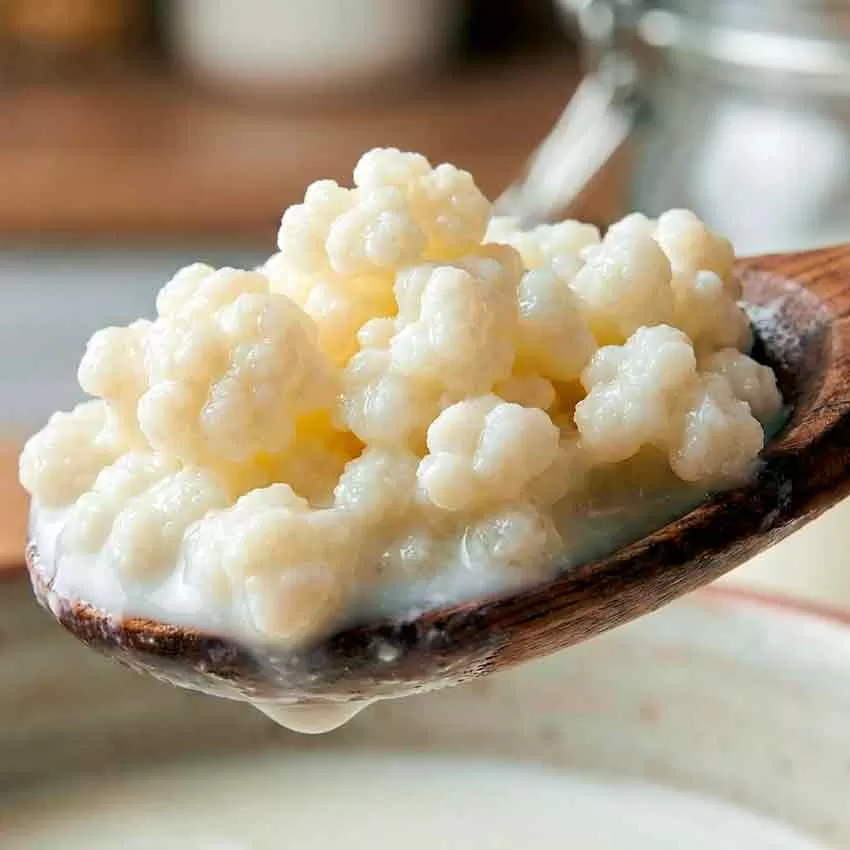 100% Live & Active
Start Fresh with Certified Organic Live Milk Kefir Grains
Brew authentic, probiotic-rich homemade ferments with real living heirloom cultures. Cultivated fresh daily in small batches, our active cultures multiply naturally for a lifetime supply.