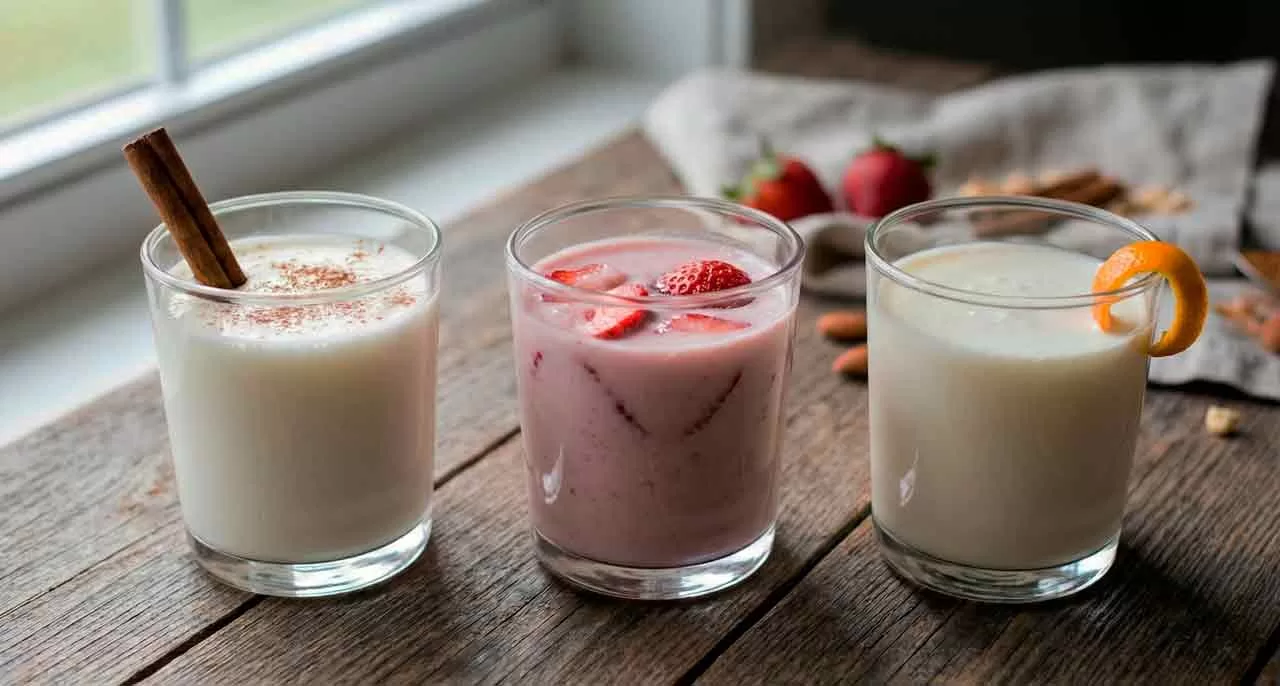
Plain milk kefir is… intense. It’s sour, yeasty, and tangy. While purists drink it straight, most of us prefer it flavored. The secret isn’t just adding fruit—it’s doing a Second Ferment. This process mellows the acidity, removes the yeasty edge, and infuses deep flavor without a blender.
What is a “Second Ferment”?
First Ferment (F1): Milk + Grains (24 hours). This makes the probiotics.
Second Ferment (F2): Kefir (No Kefir Grains) + Flavor (1-12 hours).
In F2, the bacteria eat the fructose from the fruit you add. This reduces the sour “bite” and creates a creamy, milkshake-like texture.
- How to Do It (Step-by-Step)
- Flavoring FAQs
- Microbiological Science and the Symbiotic Culture Matrix
- Complete Reference Chart for Temperature, Ratios and Fermentation Control
- Seasonal Temperature & Kitchen Environment Tips
- Quality Control, Kitchen Hygiene and Long-Term Culture Care
- Practical Checklist & Expert Takeaways for Consistent Results
How to Flavor Milk Kefir Step-by-Step (Second Ferment)
Strain — Make your kefir as usual (see our complete guide to making authentic milk kefir at home). Remove the kefir grains and put them in fresh milk. Infuse — Pour the finished liquid into a clean jar or bottle. Add your chosen flavoring (Peel, Fruit, or Spice). Seal — Close the lid tight. Wait — Leave it on the counter for 4 to 12 hours.
Tip: In summer, 4 hours is enough. In winter, you might need 12. Look for: Small whey pockets forming. This means the bacteria are active. Remove & Chill — Fish out the fruit/peel. Put the jar in the fridge. As it cools, it will thicken into a drinkable yogurt texture.
Milk Kefir Second Fermentation FAQs
Can I use powdered spices?
You can, but they create a “gritty” texture. Whole spices (cinnamon sticks, whole cloves, vanilla pods) work better because you can remove them before drinking.
Will it explode?
Unlike Water Kefir, Milk Kefir doesn’t create massive carbonation pressure. However, if you add high-sugar fruit (like mango) and leave it for 24 hours sealed, it might pop. Burp the jar if you are worried.
Can I use frozen fruit?
Yes! Frozen fruit actually breaks down faster, releasing juices into the kefir quicker than fresh fruit.
Does this increase alcohol?
Slightly. Adding sugar (fruit) and sealing the jar encourages yeast activity, which produces minute amounts of alcohol. It is still negligible (usually under 0.5%), but higher than plain kefir.
Prefer to blend it instead? Try our 5-Minute Kefir Smoothie Recipe.
Microbiological Science and the Symbiotic Culture Matrix
To truly master how to flavor milk kefir (second fermentation) in your home kitchen, it helps to understand what happens at a microscopic level inside your fermentation jar. Unlike commercial supermarket beverages that are inoculated with a handful of laboratory-isolated bacteria and then heat-treated for shelf stability, authentic homemade ferments rely on a living, self-regulating ecosystem. In live milk kefir grains, this ecosystem is bound together by kefiran—a natural, water-soluble polysaccharide matrix produced primarily by Lactobacillus kefiranofaciens. In fresh water kefir grains, a translucent dextran structure built by Lactobacillus hilgardii and Leuconostoc mesenteroides houses the symbiotic bacteria and yeasts, while a kombucha SCOBY weaves tough layers of pure microbial cellulose through the action of Komagataeibacter xylinus.
During every fermentation cycle, lactic acid bacteria (LAB), acetic acid bacteria (AAB), and beneficial non-pathogenic yeasts such as Saccharomyces cerevisiae, Kluyveromyces marxianus, and Kazachstania unispora communicate through metabolic cross-feeding. As yeasts break down complex disaccharides (lactose in dairy milk or sucrose in mineralized sugar water) into simpler monosaccharides, organic acids, B-vitamins, and trace carbon dioxide, the surrounding bacteria rapidly convert those sugars into lactic and acetic acid. This natural acidification drops the pH of your brew to a protective range between 4.0 and 4.5 within hours, naturally preventing unwanted spoilage organisms from taking hold while unlocking bioavailable amino acids, short-chain fatty acids, and digestive enzymes.
Complete Reference Chart for Temperature, Ratios and Fermentation Control
Whether you are brewing your very first jar or fine-tuning your daily routine for maximum creaminess, carbonation, and probiotic density, keeping your temperature, culture ratio, and fermentation window in balance is the secret to repeatable success. Use the reference table below to adjust your batch throughout the year:
| Fermentation Parameter | Optimal Daily Standard | Cool Winter Adjustment | Warm Summer Adjustment |
|---|---|---|---|
| Room Temperature | 20°C – 23°CIdeal balance | 16°C – 19°CPlace in warm cupboard | 25°C – 28°CCool kitchen spot |
| Kefir Grains-to-Milk Ratio | 1 : 15 to 1 : 20(e.g., 15g per 250ml) | Increase live milk kefir grains to 1 : 10 | Reduce live milk kefir grains to 1 : 25 or 1 : 30 |
| Fermentation Time | 24 HoursConsistent cycle | 24 to 30 Hours until gently thickened | 14 to 18 Hours before whey pockets split |
| Recommended Dairy Base | Whole Milk (3.5% fat)Cow, Goat or Sheep | Pre-warm fridge milk to 20°C before pouring | Use cold milk straight from the refrigerator |
Seasonal Temperature & Kitchen Environment Tips
Home brewers experience noticeable seasonal shifts in indoor kitchen temperatures throughout the year that directly influence living probiotic cultures. During cooler autumn and winter months, indoor heating often fluctuates between 17°C at night and 20°C during the day. Because lactic acid bacteria slow their metabolic rate significantly below 18°C while cold-tolerant yeasts remain active, winter batches fermented on a cold stone countertop can occasionally turn out thinner or slightly yeasty. Placing your glass fermentation jar on an elevated wooden shelf, inside an insulated kitchen cupboard, or wrapping the jar in a thick kitchen towel maintains a steady 21°C to 22°C microclimate so your live milk kefir grains and fresh water kefir grains continue multiplying vigorously all winter long.
Conversely, during warm summer weeks when indoor temperatures climb above 25°C, fermentation accelerates dramatically. A batch that normally takes twenty-four hours in spring may reach peak thickness and tartness in just fourteen to sixteen hours. Instead of letting the jar over-ferment into sharp curds and whey on the counter, you can either reduce the portion of kefir grains per liter of liquid, start your batch with cold milk or chilled mineralized water directly from the refrigerator, or strain the finished drink early and let it mature gently in the fridge overnight.
Selecting the right local ingredients in Belgian and Dutch supermarkets also makes a remarkable difference in culture vitality. For dairy fermentation with live milk kefir grains, standard pasteurized whole cow milk (volle melk with at least 3.5% milk fat) or certified organic farm milk (biologische volle melk from chains such as Albert Heijn, Jumbo, Ekoplaza, Delhaize, Colruyt, Bio-Planet, or Carrefour) produces the thickest texture and fastest weekly kefir grain growth. Avoid lactose-free milk or ultra-filtered high-protein drinks as a permanent base, because live milk kefir grains require natural lactose to synthesize their protective kefiran structure. For fresh water kefir grains, moderate-hardness tap water in Flanders, Brussels, and most Dutch provinces works well once any residual chlorine has evaporated, or you can use spring water enriched with unrefined organic blond cane sugar and a single unsulfured dried fig or apricot.
Quality Control, Kitchen Hygiene and Long-Term Culture Care
Maintaining a thriving home fermentation station does not require laboratory sterility; in fact, antibacterial soaps, bleach residues, and scalding water are among the most common reasons beginners accidentally weaken their living starter cultures. Whenever you strain your kefir grains, use a clean nylon, BPA-free plastic, or high-grade 304 stainless steel mesh strainer and a silicone or wooden spoon. Rinse your glass fermentation jar with hot tap water and a mild, unscented dish soap, then rinse thoroughly with cold water so zero surfactant film remains on the glass walls. Every few batches, you can transfer your live milk kefir grains into a fresh jar without washing the kefir grains themselves—rinsing live milk kefir grains under tap water washes away the protective surface microflora and outer kefiran coat that they rely on for immediate fermentation.
If your schedule changes or you plan a holiday away from home, your living cultures are remarkably adaptable. For pauses of three to ten days, simply place your live milk kefir grains in a jar of fresh cold whole milk (or your fresh water kefir grains in fresh mineralized sugar water) with a lid loosely fitted and store the jar in the back of the refrigerator at 4°C. Cold temperatures put the symbiotic bacteria and yeasts into a gentle metabolic hibernation, slowing sugar consumption by nearly eighty percent. Upon your return, strain off the cold resting liquid, feed the kefir grains a fresh room-temperature batch, and within one to two daily cycles they will regain their full fermenting speed and probiotic potency.
Practical Checklist & Expert Takeaways for Consistent Results
To get the highest probiotic diversity and best flavor from every batch you brew at home, keep three foundational habits in mind. First, observe your ferment by sight, aroma, and taste rather than watching the clock alone: when milk kefir coats the side of the glass jar like thick buttermilk and shows the very first tiny pockets of clear whey at the bottom, or when water kefir turns lightly cloudy with rising micro-bubbles and a crisp, semi-dry finish, it is ready to strain. Second, give newly arrived live milk kefir grains or fresh water kefir grains two to three daily room-temperature cycles after postal transit so the bacteria-to-yeast ratio re-stabilizes to your local kitchen environment and milk or water source. Third, as your kefir grains multiply by five to ten percent each week, divide your surplus culture so your grain-to-liquid ratio stays balanced—you can blend extra kefir grains into morning smoothies, share them with friends, or dehydrate a backup portion for long-term peace of mind.
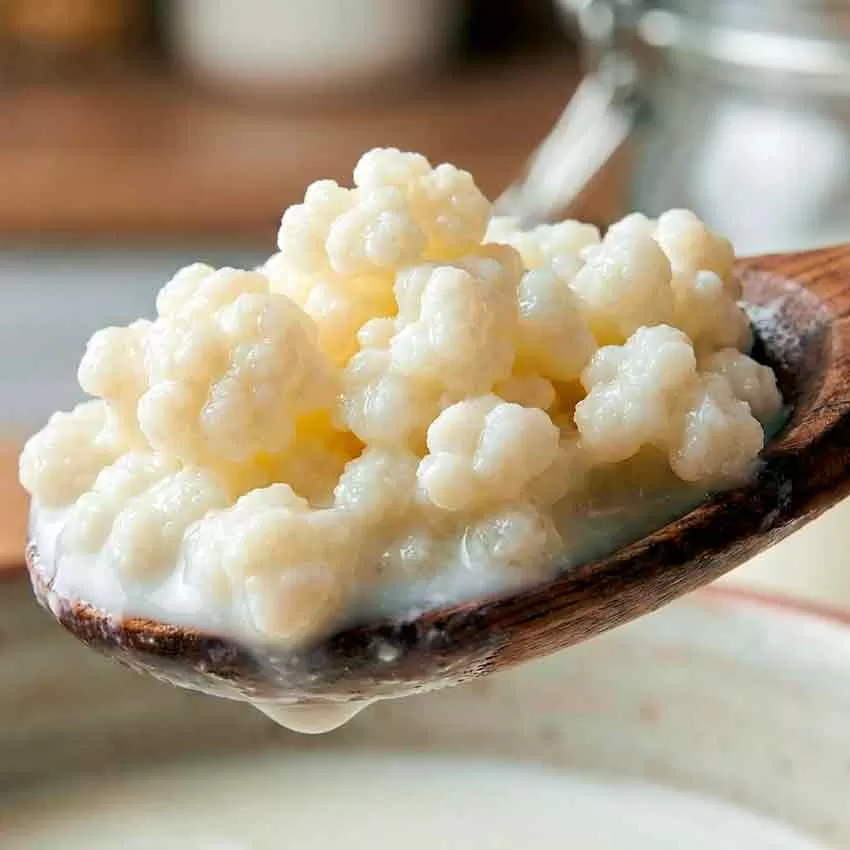 100% Live & Active
Start Fresh with Certified Organic Live Milk Kefir Grains
Brew authentic, probiotic-rich homemade ferments with real living heirloom cultures. Cultivated fresh daily in small batches, our active cultures multiply naturally for a lifetime supply.