The Mysterious Origins and History of Kefir Grains
Kefir grains are a biological mystery. They cannot be created in a lab; they must be passed down. Trace the fascinating journey of this ancient superfood from the slopes of the Caucasus Mountains to your kitchen counter.
The Legend of the Prophet’s Grains
The true origin of kefir grains is lost to time, shrouded in legend and mystery. We know they originated centuries ago among the nomadic tribes living on the northern slopes of the Caucasus Mountains (the region dividing Europe and Asia).
According to local legend, the Great Prophet Muhammad gave the very first grains to the Orthodox people of the region, teaching them how to make the fermented drink. They were called “The Grains of the Prophet.” The tribes believed the grains would lose their potency and magical healing properties if the secret of their use was revealed to outsiders. For centuries, the existence of these “magic grains” remained a closely guarded secret, passed down only within families and tribes as part of their wealth.
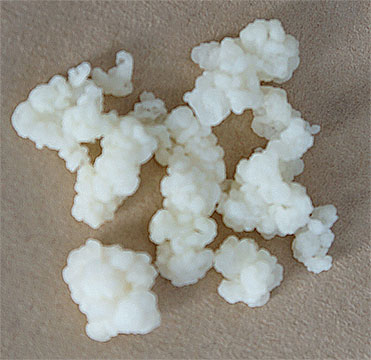
The mysterious “grains” look like tiny cauliflower florets.
The Traditional Way of Brewing
Traditionally, the tribespeople made milk kefir in goatskin or leather bags. They would add fresh milk (from goats, cows, or sheep) and the precious grains to the bag. During the day, the bags were hung outdoors to warm in the sun, aiding fermentation.
In the evening, the bags were brought inside and often hung near the doorway. It was customary for anyone passing by to prod or punch the bag to help mix the contents. As the finished kefir was consumed, fresh milk was continuously added, keeping the cycle alive for generations.
How Kefir Conquered the World
Until the 19th century, the world outside the Caucasus had never heard of kefir. News began to spread when Russian doctors traveling in the region noticed that the local population, who drank kefir daily, rarely suffered from tuberculosis or digestive disorders.
The Mission of Princess Irina
In the early 20th century, the Blandov brothers, who owned a large dairy in Moscow, were commissioned by the Russian Physicians’ Society to obtain these healing grains. It was not easy, as the tribes refused to sell them.
They concocted a plan involving a beautiful employee, Irina Sakharova. She was sent to beguile a local prince into giving her some grains. The plan initially failed, and she was even kidnapped by the prince who wanted to marry her! A rescue mission and legal action followed. To avoid further trouble, the prince finally offered Irina restitution: about 10 pounds of the precious kefir grains.
She brought them back to Moscow in 1908, and the first bottles of commercial kefir drink went on sale. The rest is history. Today, kefir is the most popular fermented milk in Russia and has spread worldwide.
What Exactly Are These “Grains”?
Despite the name, kefir grains are not cereal grains like wheat. They are a biological phenomenon. A kefir grain is a symbiotic culture of bacteria and yeast (a SCOBY) held together in a polysaccharide matrix created by the bacteria. They look like small, rubbery pieces of cauliflower.
When placed in milk, these microorganisms consume the lactose (milk sugar) and produce lactic acid, carbon dioxide (fizz), and a host of beneficial compounds including B vitamins (B12, biotin), vitamin K2, calcium, magnesium, and enzymes. It is this unique, complex combination that gives authentic milk kefir its renowned probiotic properties.
Keep the Ancient Tradition Alive
Every authentic milk kefir grain used today is a direct descendant of those original grains from the Caucasus. You cannot make them artificially; they must be grown.
To enjoy the true health benefits and taste of traditional kefir, you need these fresh, living grains—not a factory-made powdered starter.
Where to Buy Authentic Grains Today
We recommend getting your grains from specialized suppliers who dedicate themselves to keeping these ancient cultures alive and healthy. Get a complete starter kit with fresh grains guaranteed to grow.