
Sharing is the heart of the kefir community! Since healthy grains multiply endlessly, you will eventually have enough to share. However, throwing them in a ziplock bag often leads to leaks and dead grains. Here is the professional method to ensure they arrive alive and happy.
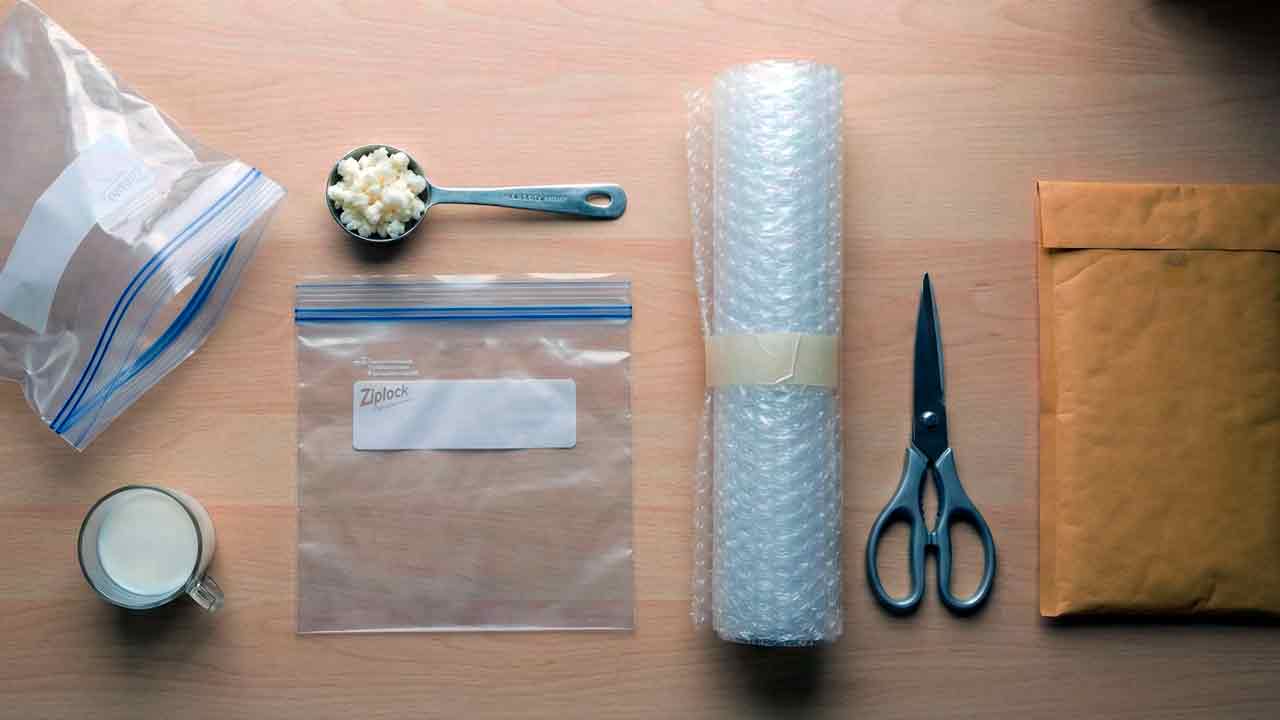
- Prep Time: 10 Mins
- Survival Time: 5-7 Days
- Difficulty: Easy
✂️ What You Need
- Heavy Duty BagsFreezer-grade Ziplocks (x2)
- Bubble WrapOr a padded envelope
- Fresh Grains1 Tbsp is enough
⚙️ Packing Steps
Prepare the “Food”
Water Kefir: Put them in the bag with a tablespoon of sugar water or plain water with a pinch of sugar.
Remove Air & Seal
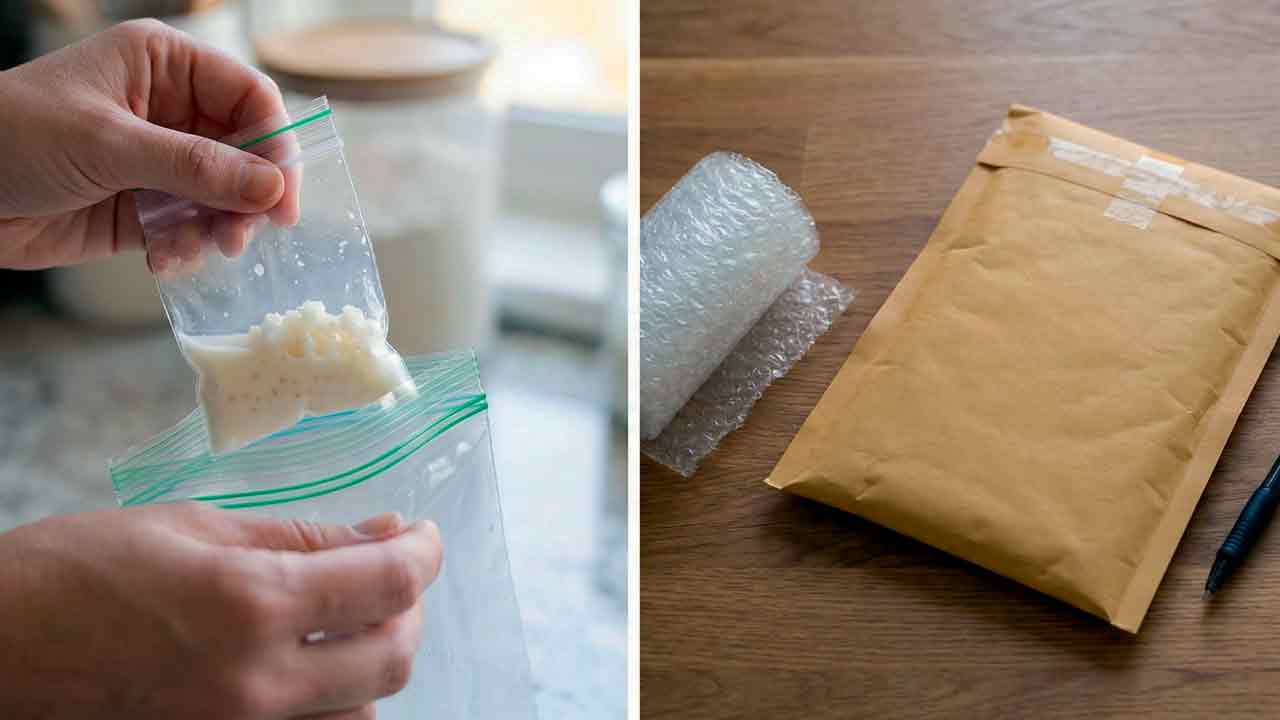
Double Bag It
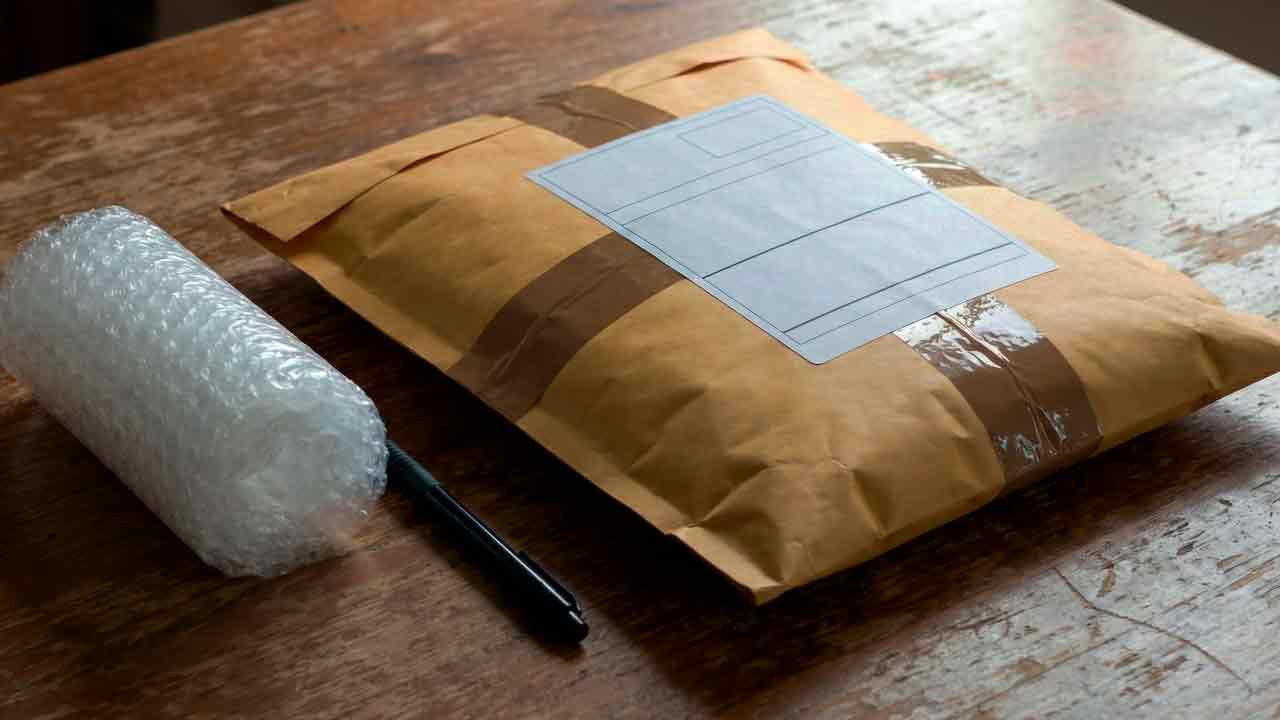
Pad & Ship
❓ Extensive Shipping FAQs
Basic Concerns
Should I ship them in a glass jar?
No! Glass breaks easily in the mail, creating a mess and danger for postal workers. Heavy-duty plastic bags are flexible and much safer.
Will the bag explode from fermentation?
By adding only a tiny splash of milk/sugar and squeezing air out, you minimize fermentation activity. If the trip is under 5 days, gas pressure is rarely an issue.
Can I dry them instead?
Yes. You can rinse and dehydrate them on parchment paper for 3-4 days. Dried grains are safe for months but take 1-2 weeks to fully “wake up” for your friend.
Do I need ice packs?
Only in extreme summer heat (over 30°C). In normal weather, grains survive ambient temps fine. If using ice, wrap it well so it doesn’t freeze the grains directly.
Weather & Timing
How long can they survive in the mail?
They are very hardy. 5-7 days is usually fine. Beyond 10 days, the risk of starvation or yeast overgrowth increases significantly.
What is the best day to ship?
Ship on a Monday or Tuesday. This ensures the package moves during the week and doesn’t get stuck in a hot postal depot over the weekend.
What if it’s freezing outside?
This is better than extreme heat! Freezing just puts the grains into dormancy. They will survive, but will need a few extra days to wake up once they arrive.
What if they arrive hot?
Heat speeds up fermentation, so they will arrive very sour and potentially yeasty. Get them into fresh, cool milk immediately. They should recover after 2-3 batches.
Preparation & Arrival
Why rinse milk grains with milk, not water?
Milk grains have a protective slimy layer called Kefiran. Rinsing with water (especially chlorinated tap water) damages this layer and shocks the grains. Milk is their natural habitat.
How much should I send?
1 tablespoon (approx 15g) is plenty for a starter batch of 250ml-500ml. Don’t overwhelm your friend with a whole cup of grains!
Can I ship internationally?
It is very risky. Customs delays often mean the package sits for 2+ weeks, which will likely kill the grains. Stick to domestic or continental shipping.
Do I need to declare them at customs?
If shipping internationally, yes. “Live biological cultures” can be problematic. Often it is easier to label them as “Dehydrated Food Sample” (if dried) or “Fermentation Starter – No Commercial Value.”
My friend received them, now what?
Tell them to put the grains in a cup of fresh milk immediately. The first batch should be discarded (it might taste yeasty). The second batch will usually be perfect.
They smell awful upon arrival. Are they dead?
Likely just stressed. Stressed grains smell strongly of yeast or even slightly cheesy. If they smell like vomit or rotten eggs, they are dead. Otherwise, try one revival batch.
Is it easier to just send powder starter?
Easier to ship? Yes. Better for your friend? No. Powder is single-use and won’t grow. Sending real grains gives them a lifetime supply.