👻 Troubleshooting Kombucha & SCOBY
Unsure if your SCOBY is healthy? Does your kombucha taste like vinegar? Is it flat? Find answers to the most nerve-wracking kombucha brewing questions here.
⚠️ Safety & Mold (The #1 Question)
How do I recognize mold? (Danger!)
The difference between mold and a healthy but ugly SCOBY is crucial.
- MOLD IS: Always dry and fuzzy/hairy. It sits on top of the SCOBY or liquid. It has colors like white, green, blue, or black. It often grows in circular patches.
- MOLD IS NOT: Brown stringy bits hanging underneath (that is yeast). A slimy smooth layer on top (that is a new baby SCOBY). Bubbles trapped under the SCOBY surface.
Solution for mold: Discard EVERYTHING (SCOBY + liquid). It is unsafe. Sanitize your jar thoroughly with hot water and vinegar. Start over with a new SCOBY and ensure you use enough strong starter tea and keep it in a warm spot.
There is a white, dusty/wrinkly film, but it’s not fuzzy (Kahm Yeast).
This is often Kahm Yeast, not mold. It’s not immediately dangerous, but it can ruin the flavor of your kombucha (making it taste musty). It often results from not enough acidity (too little starter tea) or too much oxygen exposure.
Solution: You can try skimming it off. If the kombucha underneath still smells and tastes okay, it’s fine. If it keeps returning, it’s often better to start over with more starter tea to lower the pH immediately.
Solution: You can try skimming it off. If the kombucha underneath still smells and tastes okay, it’s fine. If it keeps returning, it’s often better to start over with more starter tea to lower the pH immediately.
Help, fruit flies!
Fruit flies love kombucha. If they get into your jar and lay eggs, you will see small larvae (tiny worms) in your SCOBY.
Solution: Unfortunately, if there are larvae, you must discard the SCOBY and the liquid. It’s ruined.
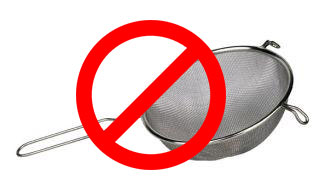
Prevention is key: Use a tightly woven cloth (like a tea towel or old t-shirt) and a strong rubber band. Cheesecloth is often too loose; they can crawl right through it!
Solution: Unfortunately, if there are larvae, you must discard the SCOBY and the liquid. It’s ruined.
Prevention is key: Use a tightly woven cloth (like a tea towel or old t-shirt) and a strong rubber band. Cheesecloth is often too loose; they can crawl right through it!
SCOBY Behavior & Growth
My SCOBY sunk to the bottom / is floating sideways.
Don’t panic. This is perfectly normal. A SCOBY does what it wants. It does not need to float on top to work. As long as there is no mold and your tea is getting more sour, everything is fine.
No new SCOBY (baby) is forming on the surface.
A thin, transparent film should form, slowly thickening into a white layer. Has nothing happened after a week?
Possible causes:
Possible causes:
- Too cold: Below 20°C (68°F) the culture works very slowly or goes dormant. Find a warmer spot (23-26°C / 73-79°F is ideal).
- Moved the jar: If you move or bump the jar frequently, you disrupt the formation of the new layer. Leave it alone.
There are gross brown stringy bits hanging from my SCOBY.
It looks unappealing, but it’s a good sign! These are strands of yeast. They are essential for fermentation and create the carbonation. Do not remove them.
Taste & Fizz Problems
My kombucha tastes like vinegar.
It has fermented too long. All the sugar has been consumed and turned into acid. It is safe to drink (you can dilute it with water or juice), but might not be palatable.
Solution: Taste your next batch sooner (start tasting after 7 days). Harvest as soon as the sweet/sour balance is perfect for you. The “vinegar” makes excellent, strong starter tea for your next batch!
Solution: Taste your next batch sooner (start tasting after 7 days). Harvest as soon as the sweet/sour balance is perfect for you. The “vinegar” makes excellent, strong starter tea for your next batch!
The kombucha is flat (no bubbles).
Kombucha usually has very little fizz after the first fermentation (F1) in the open jar. This is normal.
For bubbles, you need a Second Fermentation (F2):
For bubbles, you need a Second Fermentation (F2):
- Bottle the kombucha in pressure-safe flip-top bottles.
- Add a sugar source (fruit, juice, or a tsp of sugar) as food for the yeast.
- Seal the bottle tightly and let it sit in a warm spot for 2-5 days. The yeast will create carbonation that cannot escape.
- Refrigerate before opening to lock in the fizz.