What Kind of Milk Do I Use to Make Kefir?
Choosing the Best Milk for Making Kefir: A Complete Guide
The quality of your milk directly impacts the taste, texture, and health of your milk kefir. From raw organic farm milk to supermarket UHT, we compare the options to help you choose the best fuel for your grains.
Milk: The Fuel for Your Culture
Kefir grains are living organisms that need lactose (milk sugar) to survive and thrive. While they can ferment almost any type of mammalian milk containing lactose, the processing of that milk changes the final result.
Generally, whole milk (full-fat) produces a thicker, creamier, and richer kefir than low-fat or skim milk. But beyond fat content, the pasteurization method is the biggest factor.
The 3 Main Milk Types Compared
🐄 1. Raw Milk (Unpasteurized)
This is milk straight from the farm, untreated and unheated. Many traditionalists consider this the gold standard for kefir.
- ✅ Pros: Richest nutritional profile, contains its own natural enzymes and beneficial bacteria, often results in the most complex flavor and creamies texture.
- ❌ Cons: Expensive, hard to find in many areas, short shelf life, and carries a slight risk of pathogens (though kefir fermentation makes it safer).
🥛 2. Standard Pasteurized Milk (Recommended)
This milk has been heated (usually around 70°C for 15-20 seconds) to kill harmful bacteria. This is the standard fresh milk found in the refrigerated section.
- ✅ Pros: Widely available, affordable, safe, produces reliable and consistent kefir. This is the best choice for most people.
- ❌ Cons: Some heat-sensitive vitamins and enzymes are lost during pasteurization.
📦 3. UHT Milk (Ultra-High Temperature)
This “long-life” milk is heated to a very high temperature (around 135°C) for a few seconds, sterilizing it completely so it can be stored unrefrigerated for months.
- ✅ Pros: Very cheap, convenient for long-term storage, makes a surprisingly thick kefir.
- ❌ Cons: The high heat alters the milk proteins, which can give the kefir a slightly “cooked” or different taste that some dislike. Significant nutrient loss occurs.
The Bottom Line: Which Should You Choose?
Your kefir grains will happily ferment any of these milks. The best choice depends on your budget, access, and priorities.
- ⭐ For the best flavor & nutrition: Choose fresh, high-quality (organic) pasteurized whole milk.
- ⭐ For the absolute traditionalist: Seek out safe, raw organic farm milk.
- ⭐ For budget & convenience: UHT milk works fine and makes a thick kefir.
Ultimately, the quality of the milk is less important than having healthy, active kefir grains. Even UHT milk becomes a powerful probiotic superfood after fermentation!
Quick Guide: Making Kefir with Your Chosen Milk
Once you have your milk, the process is simple:
- Combine: Place 1 tablespoon of grains in a clean glass jar and add about 500ml (2 cups) of milk.
- Cover: Secure a breathable cloth (like a coffee filter) over the jar with a rubber band.
- Ferment: Let it sit at room temperature away from direct sunlight for about 24 hours.
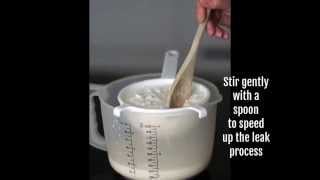
- Strain: When thickened, strain the kefir into a bowl using a plastic sieve.
- Repeat: Put the grains back in the jar with fresh milk for the next batch. Enjoy your drink!
(For detailed instructions, see our full How to Make Milk Kefir guide).
Frequently Asked Questions About Milk & Grains
Does coconut milk kefir compare to dairy kefir?
What is the best ratio of grains to milk?
Why are my grains getting smaller?
Why is my kefir so sour?
Get the Best Grains for Your Milk
No matter which milk you choose, you need strong, healthy grains to start.

Complete Milk Kefir Starter Kit
Includes 100% certified organic, live milk kefir grains designed for beginners. Guaranteed to grow!