Homemade Yogurt — Thick & Creamy Guide
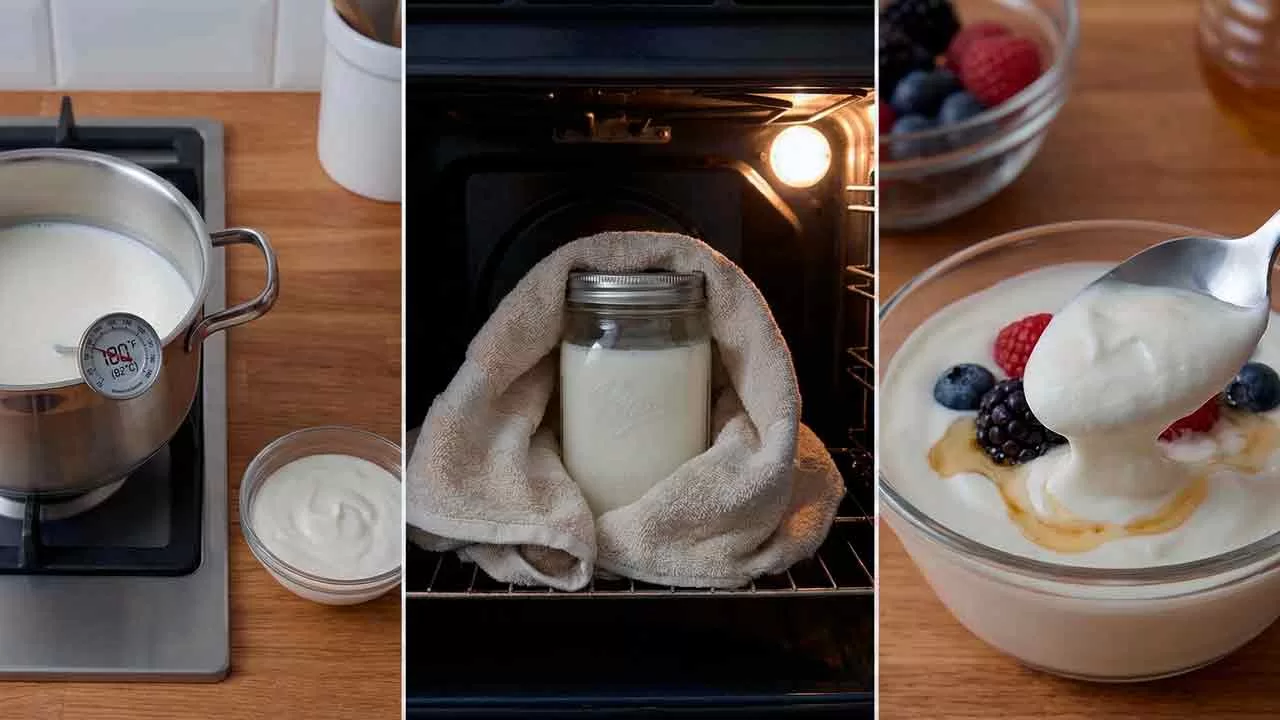
Master the timeless craft of thick, velvety homemade yogurt. Pure wholesome ingredients without fillers, thickeners, or artificial stabilizers.
🥣 Ingredients
- ✓1 Litre — Whole Milk
- ✓2 Tablespoons — Yogurt Starter
- ✓Optional — Milk Powder (For thickness)
Heavy-bottomed saucepan, digital kitchen thermometer, whisk, and clean glass jars with lids.
👩🍳 Step-by-Step Instructions
Scald Milk
Cool Down
Inoculate
Incubate
💡 Thick Texture Secret
Holding whole milk at 85°C (185°F) for 10-15 minutes denatures whey proteins (lactoglobulin), resulting in an exceptionally thick, Greek-style set without gelatin.
❓ Frequently Asked Questions
Do I really need to heat the milk first?
Yes. Heating to 82°C changes the whey proteins (denaturation), allowing them to form a tighter mesh with casein. This results in much thicker yogurt.
Can I use raw milk?
Yes, but the yogurt will be thinner unless you heat it. If you want to maintain raw enzymes, only heat to 43°C, but expect a drinkable consistency.
What starter should I use?
You can use 2 tablespoons of plain store-bought yogurt (with live cultures) or a heirloom Bulgarian starter .
Why is my yogurt runny?
This is usually due to incubation temperature fluctuating too much, not heating the milk high enough initially, or a weak starter.
How long should I incubate?
6 hours gives a mild flavor. 10 hours or more results in a tangier, firmer yogurt as more lactose is consumed.
Can I use plant-based milk?
Yes, soy milk works best due to its protein structure. Almond and coconut milk usually require a thickener (like agar or gelatin) to set properly.
Do I need a yogurt maker?
No. You can wrap the jar in towels and place it in a cooler, use a thermos flask, or put it in an oven with just the light on. Learn more about our complete yogurt maker comparison and instructions .
How do I make Greek Yogurt?
To make Greek yogurt , simply line a colander with cheesecloth and strain your finished yogurt for 2-4 hours to remove the whey.
Can I add sugar before fermenting?
It is better to add sweeteners (honey, maple syrup, fruit) after the fermentation is complete to avoid interfering with the bacteria.
How long does homemade yogurt last?
It keeps well in the refrigerator for about 2 weeks. The flavor may become slightly more tart over time.