Basic Kombucha First Fermentation

The essential master recipe for brewing raw probiotic kombucha at home using whole tea leaves, pure organic sugar, and a healthy living SCOBY culture.
🥣 Ingredients
- ✓4 Litres — Filtered Water
- ✓4 Bags/tsp — Black Tea
- ✓1 Cup (200g) — White Sugar
- ✓1 SCOBY — + 1 Cup Starter Tea
3 to 5 Litre glass brewing jar, tight-weave cotton cloth, rubber band, and stainless steel / wooden spoon.
👩🍳 Step-by-Step Instructions
Brew & Sweeten
Cool Down
Add Culture
Ferment
💡 Breathing Culture Tip
Never seal the jar with an airtight lid during F1! Your SCOBY requires continuous oxygen flow to metabolize tea and sugar into healthy organic acids.
❓ Frequently Asked Questions
How long does the First Ferment (F1) take?
F1 usually takes between 7 and 14 days. The duration depends entirely on the room temperature; warmer temperatures speed up fermentation.
Why must the tea cool before adding the SCOBY?
If the tea is too hot (above 35°C), it will pasteurize (kill) the live bacteria and yeast in the SCOBY, preventing fermentation.
What kind of tea should I use?
Black tea is standard and provides the best nutrients. Green tea can also be used. Avoid flavored teas containing oils.
Why is white sugar necessary?
The SCOBY relies on simple sugars. Plain white granulated sugar provides the cleanest food source. Honey can damage the SCOBY over time.
What is the starter tea for?
Starter tea lowers the pH of the new batch immediately, creating an acidic environment that prevents mold before the SCOBY establishes itself.
What is the ideal temperature for F1?
The ideal temperature range is 20°C to 24°C (68°F to 75°F).
Do I need to clean my jar?
The jar must be clean. Wash it with hot water and soap, rinse thoroughly, and consider a final rinse with vinegar to eliminate soap residue.
How do I know when the F1 is finished?
It’s finished when it tastes slightly sweet and pleasantly tart. If it tastes strongly of vinegar, it is over-fermented.
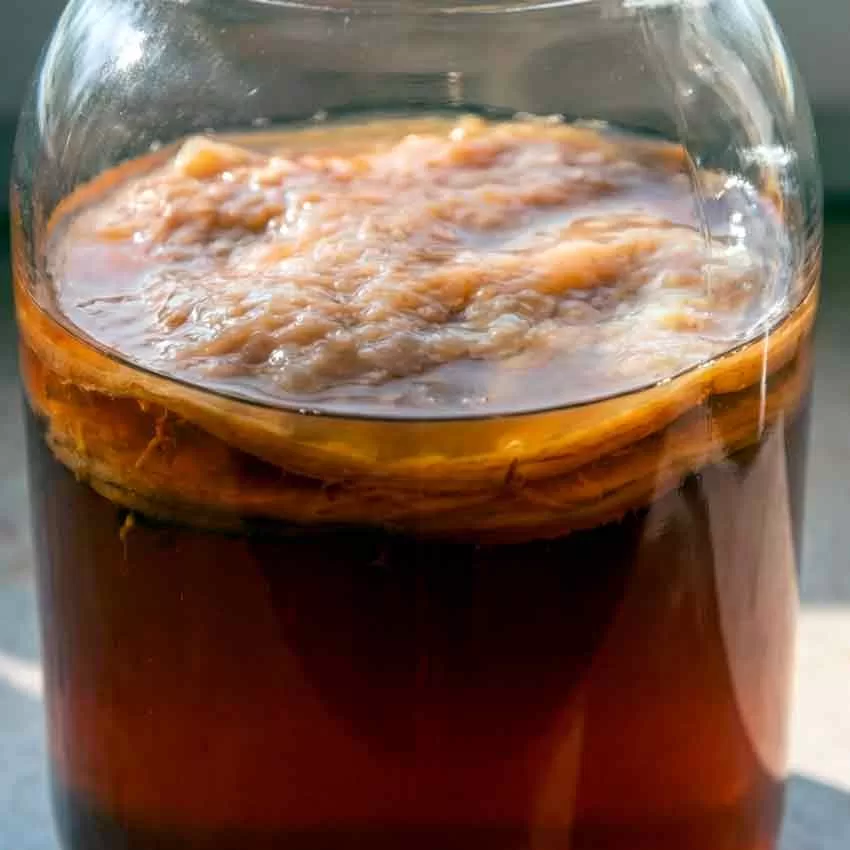
What is the film on top of the liquid?
That is the new baby SCOBY forming! It is a sign of a healthy, active fermentation.
Can I use decaf tea?
You can use decaf tea, but fermentation may be slower and the SCOBY may not grow as vigorously over time.
Probiotic Science & Nutritional Benefits of Foundational Kombucha First Fermentation (F1)
First fermentation (F1) is the biological heart of craft kombucha brewing. When you steep real Camellia sinensis tea leaves (black, oolong, or green tea), dissolve pure cane sugar, cool the infusion below 28°C, and inoculate it with a live kombucha SCOBY plus unpasteurized acidic starter tea, a two-kingdom relay race begins. Osmophilic yeasts cleave sucrose into glucose and fructose via invertase, producing subtle aromatic esters, while aerobic acetic acid bacteria (Komagataeibacter xylinus and Acetobacter) oxidize ethanol into tangy acetic acid, detoxifying gluconic acid, and a brand-new protective baby SCOBY pellicle across the top surface.
Unlike shelf-stable supermarket alternatives that undergo high-heat pasteurization after culturing—eliminating 100% of living bacteria to extend warehouse shelf life—preparing Foundational Kombucha First Fermentation (F1) at home with live kombucha SCOBY cultures preserves delicate organic acids, B-vitamins (including folate, riboflavin, and biotin), bioavailable minerals, and active microbial enzymes right up to the moment you serve your glass or plate. Regular inclusion of unpasteurized fermented foods in daily meals has been shown in clinical microbiome research (such as Stanford University’s fermented-food dietary trials) to steadily increase gut microbial diversity and calm inflammatory markers.
4 Artisan Flavor Variations & Customizations
Once you master the foundational recipe card above, use these four tested kitchen variations to adapt the flavor profile across seasons and occasions:
✨ Classic Bold English Breakfast / Assam
100% organic black tea delivers high purines and tannins for maximum SCOBY thickness and classic apple-cidery tang.
✨ 50/50 Black & Jasmine Green Tea
Combines the robust mineral nourishment of black tea with floral, champagne-like brightness from green tea.
✨ Amber Oolong Craft Brew
Semi-oxidized oolong leaves produce stone-fruit, honeyed aromatics prized by artisanal taprooms.
✨ Delicate Sencha Green Kombucha
Brews slightly faster (6–8 days) with a lighter golden hue and gentle, crisp acidity.
Timing, Temperature & Make-Ahead Storage Reference Chart
Consistent texture, carbonation, and probiotic vitality come down to respecting temperature thresholds and storage windows. Keep this quick kitchen reference chart handy:
| Preparation Stage | Optimal Time & Temperature | Why It Matters for Quality |
|---|---|---|
| Sweet Tea Cooling Target | Below 28°C (room temp) before adding SCOBY | Protects living bacteria & yeasts from thermal shock |
| Starter Liquid Minimum | 10%–15% acidic unpasteurized starter tea | Drops initial pH below 4.5 to prevent mold from day 1 |
| Optimal F1 Room Temp | 22°C–25°C in a shaded spot with cloth cover | Ideal window for balanced acetic acid & baby SCOBY growth |
| Tasting & Harvest Window | Start tasting Day 7 (harvest pH 2.9–3.3) | Sweet-tart balance ready to drink or bottle for F2 |
Common Kitchen Mistakes & How to Avoid Them
Three preventable mistakes cause 95% of beginner kombucha setbacks: pouring warm tea (>32°C) onto the live culture, using flavored teas containing bergamot or citrus essential oils (such as Earl Grey, whose oils inhibit bacterial cellulose formation), and skimping on acidic starter liquid during cool winter months. Always reserve at least 150ml of finished tangy kombucha from the top of your jar per liter of new brew, and secure a tightly woven cotton cloth with a rubber band rather than loose cheesecloth.
If your base ferment ever behaves unexpectedly before you even begin this recipe—such as slow acidification in cool winter rooms or rapid summer separation—consult our dedicated kombucha SCOBY & mold troubleshooting guide for instant 24-hour adjustments so every batch starts from a vibrant, balanced living culture.
Ingredient Quality, Serving Ideas & Prebiotic Pairings
Selecting clean, minimally processed base ingredients noticeably elevates both the flavor clarity and microbial vitality of Foundational Kombucha First Fermentation (F1). Whenever possible, pair your living ferment with organic seasonal fruit, unrefined sea salt, whole aromatic spices, and filtered or spring water free from chlorine residuals. Avoid artificial preservatives such as potassium sorbate, sodium benzoate, or sulfites in add-in juices and dried fruits, as commercial antimicrobial agents are specifically formulated to halt yeast and bacterial activity.
To maximize both culinary enjoyment and digestive synergy, serve Foundational Kombucha First Fermentation (F1) alongside whole, fiber-rich plant foods rich in natural prebiotics. Soluble prebiotic fibers—abundant in berries, slightly green bananas, rolled oats, chia and flax seeds, Jerusalem artichokes, garlic, fresh culinary herbs, roasted root vegetables, and long-fermented sourdough grains—travel intact to the lower digestive tract where they selectively nourish the beneficial Lactobacillus, Leuconostoc, and Bifidobacterium strains delivered by homemade ferments. When storing multi-day batches, always choose non-reactive glass mason jars or pressure-rated swing-top glass bottles with snug food-grade seals, label your container with the preparation date, and keep your primary living mother culture fed on a steady countertop rhythm so fresh probiotic harvests are ready whenever inspiration strikes in your kitchen.
Whether you enjoy a chilled glass alongside breakfast, pack a jar for post-workout hydration and recovery, or set out an artisanal platter for weekend guests, homemade probiotic recipes turn everyday whole ingredients into living functional nutrition at a fraction of specialty health-store prices.
 100% Live & Active
Start Fresh with a Certified Organic Live Kombucha SCOBY
Brew authentic, probiotic-rich homemade ferments with real living heirloom cultures. Cultivated fresh daily in small batches, our active cultures multiply naturally for a lifetime supply.