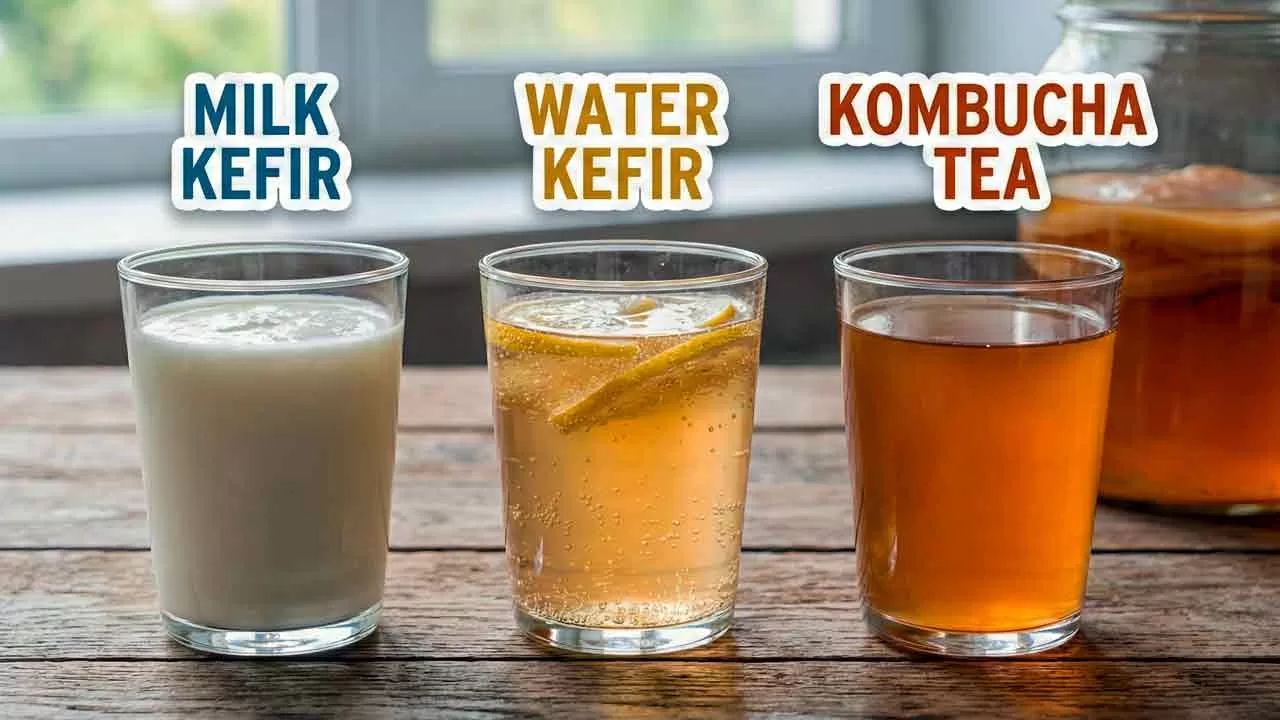
You want to improve your gut health, but you are staring at three different cultures: Milk Kefir, Water Kefir, and Kombucha. Which one should you choose?
While they are all fermented drinks, they are completely different in taste, bacteria count, and effort level. Let’s break down the differences so you can pick the perfect match.
| Feature | Milk Kefir | Water Kefir | Kombucha |
|---|---|---|---|
| Taste Profile | Sour Yogurt | Sweet Soda | Tart Apple Cider |
| Probiotic Count | High (30+ Strains) | Medium (10-15 Strains) | Low (Acetic Acid Focus) |
| Ferment Time | 24 Hours | 48 Hours | 7 – 14 Days |
| Caffeine? | No | No | Yes (Tea base) |
| Dairy Free? | No | Yes | Yes |
→Kombucha (The Detox Tea)
→Which one should you pick?
→The Big FAQ Breakdown
→Microbiological Science and the Symbiotic Culture Matrix
→Complete Reference Chart for Temperature, Ratios and Fermentation Control
→Adapting Your Fermentation Routine to Belgian, Dutch & European Kitchens
→Quality Control, Kitchen Hygiene and Long-Term Culture Care
→Practical Checklist & Expert Takeaways for Consistent Results
Water Kefir (The Soda Replacer)
What is it? Sugar water fermented by crystal-like kefir grains. It creates a fizzy, carbonated beverage.
Best For: Replacing Coca-Cola or Fanta. It is sweet, bubbly, and kids love it. It is lighter than milk kefir and completely vegan.
The Downside: Higher in sugar than milk kefir. Less bacteria diversity compared to milk.
Kid Friendly
Kombucha (The Detox Tea)
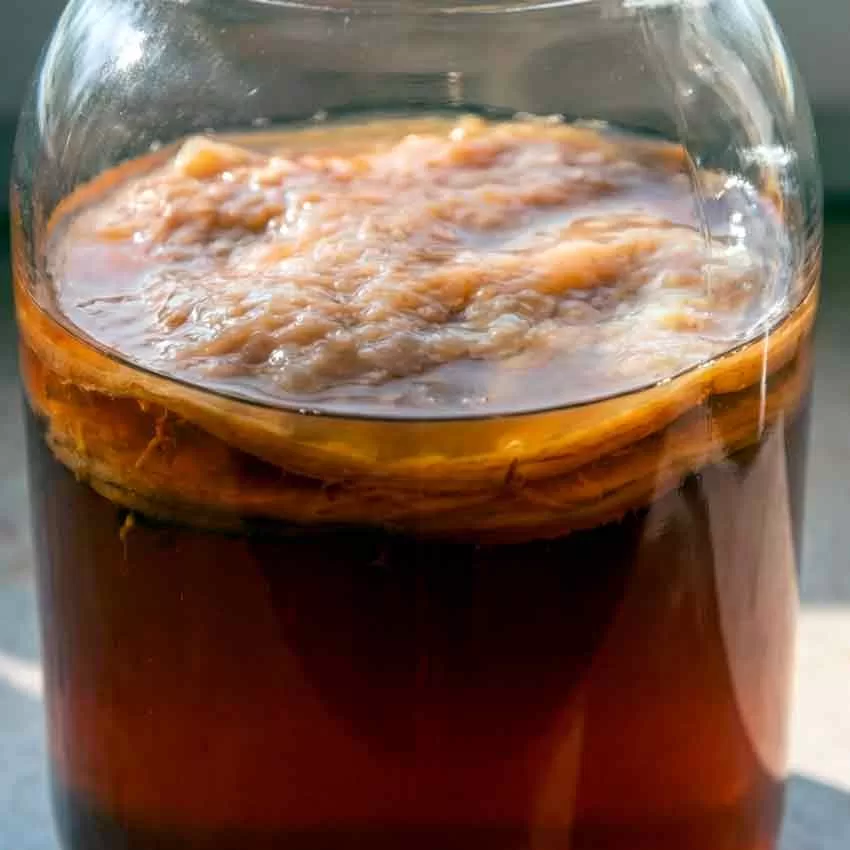
What is it? Sweet tea fermented by a SCOBY (Symbiotic Culture Of Bacteria and Yeast).
Best For: Digestion aid and energy. It contains specific acids (Glucuronic acid) that help the liver detoxify. It has a complex, “adult” taste like cider or beer.
The Downside: Takes a long time (7-14 days) to brew. It contains caffeine, so it might keep you awake at night.
Detox Power
Which one should you pick?
Winner: Milk Kefir
It is the most potent probiotic by far. It re-seeds the gut faster than the others.
Winner: Water Kefir
It is caffeine-free and easier to make than Kombucha.
Winner: Kombucha
The B-vitamins combined with tea caffeine make it a great pick-me-up.
The Big FAQ Breakdown
We gathered the top 5 questions for each ferment.
Milk Kefir Specifics
Can I drink it if I’m lactose intolerant?
Yes, usually. The fermentation process reduces lactose by up to 99%. Most people with intolerance handle kefir fine, but start with a teaspoon to test.
Is it high in calories?
It has slightly fewer calories than the milk you started with (because the bacteria eat the sugar), but it still contains fat and protein. One cup is approx. 100-150 calories depending on the milk.
Can I use Goat or Sheep milk?
Yes! Kefir grains love goat and sheep milk. In fact, goat milk kefir is often easier to digest (A2 casein) than cow milk.
Why is my kefir slimy?
This is often due to a harmless compound called Kefiran produced by the kefir grains, or a temperature change. It is safe to drink, but if it smells off, discard it.
How long do the kefir grains last?
Forever. Unlike powdered starters that die after a few batches, live kefir grains grow and reproduce indefinitely if you feed them.
Water Kefir Specifics
Is it safe for diabetics?
It is safer than soda, but not sugar-free. The kefir grains consume about 80% of the sugar. There is still residual fructose. Monitor your blood sugar if drinking.
Does it contain alcohol?
Trace amounts (0.5% to 0.7%), slightly more than milk kefir due to the fruit sugars added in the second ferment. It is rarely enough to feel effects, but be aware.
Can I use Coconut Water?
Yes! Fermented coconut water is delicious and loaded with electrolytes. Just alternate with sugar-water batches to keep the kefir grains healthy.
Why aren’t my kefir grains growing?
They likely need minerals. Try adding a pinch of baking soda, a dried fig, or using unrefined cane sugar for your next batch to boost growth.
Can I use Honey?
No. Raw honey is antibacterial and will kill your water kefir grains. Stick to cane sugar, maple syrup, or molasses.
Kombucha Specifics
Does it have caffeine?
Yes. Since it is made from black or green tea, about 30% of the caffeine remains after fermentation. It’s about 1/3 the caffeine of a cup of coffee.
Can I make it sugar-free?
No. The SCOBY needs sugar to survive and build the cellulose structure. You cannot ferment kombucha with Stevia or Xylitol.
Is that mold on top?
Usually, no. It’s likely a new “baby SCOBY” forming. If it is white/cream and smooth, it’s safe. If it is fuzzy, blue, or green, it is mold and you must toss the batch.
Can I use herbal tea?
Not exclusively. The SCOBY needs the tannins and nutrients from Camellia sinensis (Black/Green tea). You can mix herbal tea in, but keep at least 50% real tea.
Why is it so vinegar-y?
You let it ferment too long! If it tastes like vinegar, use it as a salad dressing starter. Next time, taste it earlier (Day 7) to catch the sweet spot.
Ready to start?
We ship all three cultures fresh across Europe.
Microbiological Science and the Symbiotic Culture Matrix
To truly master milk kefir vs. water kefir vs. kombucha in your home kitchen, it helps to understand what happens at a microscopic level inside your fermentation jar. Unlike commercial supermarket beverages that are inoculated with a handful of laboratory-isolated bacteria and then heat-treated for shelf stability, authentic homemade ferments rely on a living, self-regulating ecosystem. In live milk kefir grains, this ecosystem is bound together by kefiran—a natural, water-soluble polysaccharide matrix produced primarily by Lactobacillus kefiranofaciens. In fresh water kefir grains, a translucent dextran structure built by Lactobacillus hilgardii and Leuconostoc mesenteroides houses the symbiotic bacteria and yeasts, while a kombucha SCOBY weaves tough layers of pure microbial cellulose through the action of Komagataeibacter xylinus.
During every fermentation cycle, lactic acid bacteria (LAB), acetic acid bacteria (AAB), and beneficial non-pathogenic yeasts such as Saccharomyces cerevisiae, Kluyveromyces marxianus, and Kazachstania unispora communicate through metabolic cross-feeding. As yeasts break down complex disaccharides (lactose in dairy milk or sucrose in mineralized sugar water) into simpler monosaccharides, organic acids, B-vitamins, and trace carbon dioxide, the surrounding bacteria rapidly convert those sugars into lactic and acetic acid. This natural acidification drops the pH of your brew to a protective range between 4.0 and 4.5 within hours, naturally preventing unwanted spoilage organisms from taking hold while unlocking bioavailable amino acids, short-chain fatty acids, and digestive enzymes.
Complete Reference Chart for Temperature, Ratios and Fermentation Control
Whether you are brewing your very first jar or fine-tuning your daily routine for maximum creaminess, carbonation, and probiotic density, keeping your temperature, culture ratio, and fermentation window in balance is the secret to repeatable success. Use the reference table below to adjust your batch throughout the year:
| Brewing Parameter | Primary Aerobic Ferment (F1) | Secondary Carbonation (F2) | Microbiological Impact on Kombucha SCOBY |
|---|---|---|---|
| Brewing Temperature | 21°C – 25°CSteady warmth | 21°C – 24°CIn sealed bottles | Cooler rooms (<19°C) weaken acetic acid production and invite surface mold |
| Starter Tea Acidification | 10% – 15% Mature Starter(pH < 4.2) | 100% strained F1 kombucha tea | Immediate pH drop below 4.5 protects the kombucha SCOBY from wild spores |
| Tea & Sugar Substrate | 5g–7g Tea + 70g Sugarper Liter | 1–2 tsp fruit puree or ginger juice | Camellia sinensis tannins supply nitrogen; sucrose fuels yeast respiration |
| Fermentation Timeline | 7 – 12 Days(Breathable cotton cover) | 2 – 4 Days+ cold refrigeration | Balances tangy organic acids (gluconic & acetic) with residual sweetness |
Adapting Your Fermentation Routine to Belgian, Dutch & European Kitchens
Home brewers across Belgium, The Netherlands, Luxembourg, Germany, and France experience noticeable seasonal shifts in indoor kitchen temperatures that directly affect living cultures. During mild Benelux winters, indoor heating often fluctuates between 17°C at night and 20°C during the day. Because lactic acid bacteria slow their metabolic rate significantly below 18°C while cold-tolerant yeasts remain active, winter batches fermented on a cold stone countertop can occasionally turn out thinner or slightly yeasty. Placing your glass fermentation jar on an elevated wooden shelf, inside an insulated kitchen cupboard, or wrapping the jar in a thick kitchen towel maintains a steady 21°C to 22°C microclimate so your live milk kefir grains and fresh water kefir grains continue multiplying vigorously all winter long.
Conversely, during warm European summer weeks when indoor temperatures climb above 25°C, fermentation accelerates dramatically. A batch that normally takes twenty-four hours in spring may reach peak thickness and tartness in just fourteen to sixteen hours. Instead of letting the jar over-ferment into sharp curds and whey on the counter, you can either reduce the portion of kefir grains per liter of liquid, start your batch with cold milk or chilled mineralized water directly from the refrigerator, or strain the finished drink early and let it mature gently in the fridge overnight.
Selecting the right local ingredients in Belgian and Dutch supermarkets also makes a remarkable difference in culture vitality. For dairy fermentation with live milk kefir grains, standard pasteurized whole cow milk (volle melk with at least 3.5% milk fat) or certified organic farm milk (biologische volle melk from chains such as Albert Heijn, Jumbo, Ekoplaza, Delhaize, Colruyt, Bio-Planet, or Carrefour) produces the thickest texture and fastest weekly kefir grain growth. Avoid lactose-free milk or ultra-filtered high-protein drinks as a permanent base, because live milk kefir grains require natural lactose to synthesize their protective kefiran structure. For fresh water kefir grains, moderate-hardness tap water in Flanders, Brussels, and most Dutch provinces works well once any residual chlorine has evaporated, or you can use spring water enriched with unrefined organic blond cane sugar and a single unsulfured dried fig or apricot.
Quality Control, Kitchen Hygiene and Long-Term Culture Care
Maintaining a thriving home fermentation station does not require laboratory sterility; in fact, antibacterial soaps, bleach residues, and scalding water are among the most common reasons beginners accidentally weaken their living starter cultures. Whenever you strain your kefir grains, use a clean nylon, BPA-free plastic, or high-grade 304 stainless steel mesh strainer and a silicone or wooden spoon. Rinse your glass fermentation jar with hot tap water and a mild, unscented dish soap, then rinse thoroughly with cold water so zero surfactant film remains on the glass walls. Every few batches, you can transfer your live milk kefir grains into a fresh jar without washing the kefir grains themselves—rinsing live milk kefir grains under tap water washes away the protective surface microflora and outer kefiran coat that they rely on for immediate fermentation.
If your schedule changes or you plan a holiday away from home, your living cultures are remarkably adaptable. For pauses of three to ten days, simply place your live milk kefir grains in a jar of fresh cold whole milk (or your fresh water kefir grains in fresh mineralized sugar water) with a lid loosely fitted and store the jar in the back of the refrigerator at 4°C. Cold temperatures put the symbiotic bacteria and yeasts into a gentle metabolic hibernation, slowing sugar consumption by nearly eighty percent. Upon your return, strain off the cold resting liquid, feed the kefir grains a fresh room-temperature batch, and within one to two daily cycles they will regain their full fermenting speed and probiotic potency.
Practical Checklist & Expert Takeaways for Consistent Results
To get the highest probiotic diversity and best flavor from every batch you brew at home, keep three foundational habits in mind. First, observe your ferment by sight, aroma, and taste rather than watching the clock alone: when milk kefir coats the side of the glass jar like thick buttermilk and shows the very first tiny pockets of clear whey at the bottom, or when water kefir turns lightly cloudy with rising micro-bubbles and a crisp, semi-dry finish, it is ready to strain. Second, give newly arrived live milk kefir grains or fresh water kefir grains two to three daily room-temperature cycles after postal transit so the bacteria-to-yeast ratio re-stabilizes to your local kitchen environment and milk or water source. Third, as your kefir grains multiply by five to ten percent each week, divide your surplus culture so your grain-to-liquid ratio stays balanced—you can blend extra kefir grains into morning smoothies, share them with friends, or dehydrate a backup portion for long-term peace of mind.
Freshly harvested & dispatched across Europe
Free Letterbox Delivery in Europe
100% Live Arrival Guarantee
Buy a Live Organic Kombucha SCOBY in Europe
Brew authentic, probiotic-rich homemade kefir with real living cultures. Our active live milk kefir grains and fresh water kefir grains multiply endlessly with every batch!
Every order is backed by our 100% Live Arrival and Unlimited Growth Guarantee, dispatched with fast 1 to 2 business day letterbox delivery in Belgium (Bpost) and The Netherlands (PostNL) as well as across Europe, with secure checkout via iDEAL, Bancontact, Apple Pay, PayPal, and Credit Card, complete with clear English brewing instructions.
Need Fresh, Active Water Kefir Grains?
Brew your own fizzy, 100% vegan probiotic soda at home. Our authentic heirloom grains arrive alive and active with free letterbox delivery in Belgium (Bpost) & The Netherlands (PostNL).
For further reading across our fermentation library, explore our complete step-by-step water kefir brewing guide, consult the water kefir troubleshooting and carbonation hub, compare live kefir grains versus commercial powdered starters, browse our fermentation FAQ, or visit our European buying guide for fresh water kefir grains. Microbiological findings on dextran polysaccharides and symbiotic water kefir cultures are further documented in peer-reviewed food science literature on NCBI PubMed Central.